


VINTAGE GEORGIA
Winemaking is an ancient art in this republic on the Black Sea. Raise a glass to doing things the old way.


Yet it fit. Everyone in the Soviet Union knew it, thanks to wine, the greatest gift the Republic of Georgia gave mankind.
Wine was already being produced south of Tbilisi, Georgia’s capital, thousands of years ago. Throughout its history and its oppression, Georgia always had wine to fall back on.
It became a form of expression when Georgians had none. Georgia was the main source of wine for Russia. Since independence in 1991 and a Russian embargo in 1998, improved production and marketing have made its wines among the trendiest in the world.
I spent two weeks this summer in Georgia, at the eastern end of the Black Sea, and toured some of the 20 wineries around Telavi, the capital of the Kakheti region where 60% of the country’s wine is produced in an area of about 90 square miles.
In three trips to Moscow and St. Petersburg in the last 13 years, I had learned that a big Russian evening out involved a Georgian restaurant. Great food, such as its signature
When I moved to Rome in 2014, I put Georgia on my “must-see” list.
One with the winemaker
Georgia produces a variety of wines for nearly every palate, including semi-sweet wines that placated native son Joseph Stalin and the Soviet Union for decades. Its dry reds have spread across the world, and sparkling wines are growing in popularity.
Georgia is the same latitude as Tuscany and has similar conditions, with warm air from the Caspian Sea and mineral-rich water flowing from natural springs in the Caucasus mountains.
These are ideal conditions for growing its 530 varieties of grapes. The quality of Georgian wines is becoming recognized worldwide; last year its wine exports to 53 countries were up 60% from 2016 to 76.7 million bottles, generating $170 million.
The best part about Georgian wine is you’re often one on one with the winemaker. In Napa and Tuscany you sometimes fight for space in crowded tasting rooms, but except for Georgia’s high season in July and August, you’re up close with the brains behind the wine.
I saw only two other visitors in my stops at five wineries in May and June. With so few crowds, touring took little planning. I just called the well-organized Kakheti Wine Guild, which arranged five winery visits and a taxi driver
With that, here are some things to know about Georgian wine.
Fermenting in
Although Georgia has changed — this former Soviet republic attracted 2.7 million visitors in 2016 — the way it produces wine has not. Georgians use the methods their ancestors did.
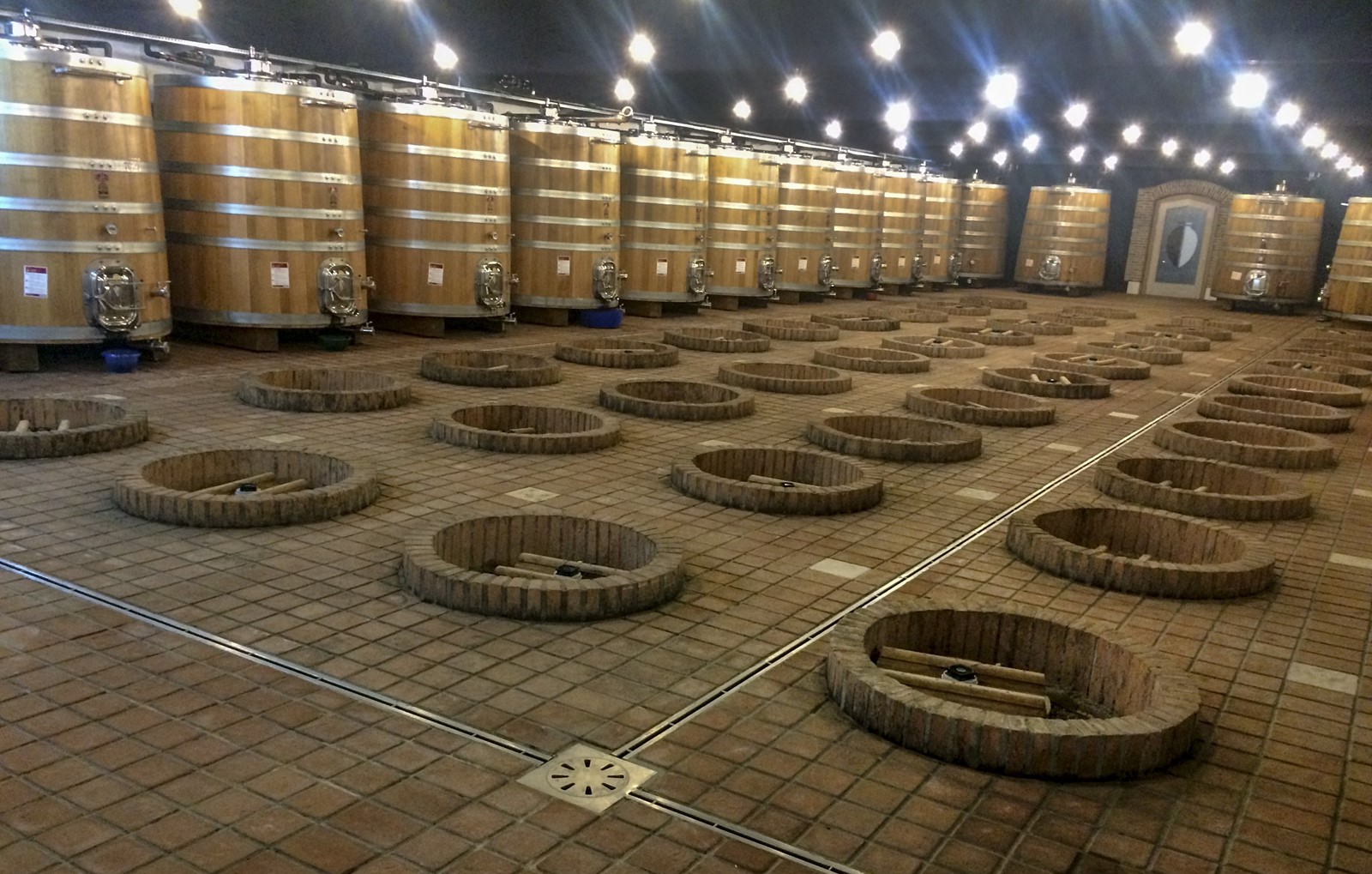
Irakli Rostomashvili stood in a small stone room surrounded by six holes in the ground. They are the production basins of Rostomaant Marani, his small family wine business, one of thousands of family wineries that dot the countryside.
The holes contain beeswax-lined clay pots called
Last year archaeologists found ancient fragments, once part of large vases decorated with carvings of grapes, that were used to store wine. Pollen analysis showed that the hilly area, about 20 miles south of Tbilisi and populated by Stone Age farmers, had grape vines.
Rostomashvili uses the same types of
After two months the
“It’s a lot of manual labor,” said Giorgi Dakishvili of Vita Vinea, another family winery. “Labor costs are high.”
What’s left, however, is an all-natural wine that is almost considered one of Georgia’s major food groups.
