


To Mary’s Kitchen, city plan is half-baked
The O.C. nonprofit’s lawyer says a proposal to provide services elsewhere falls short.
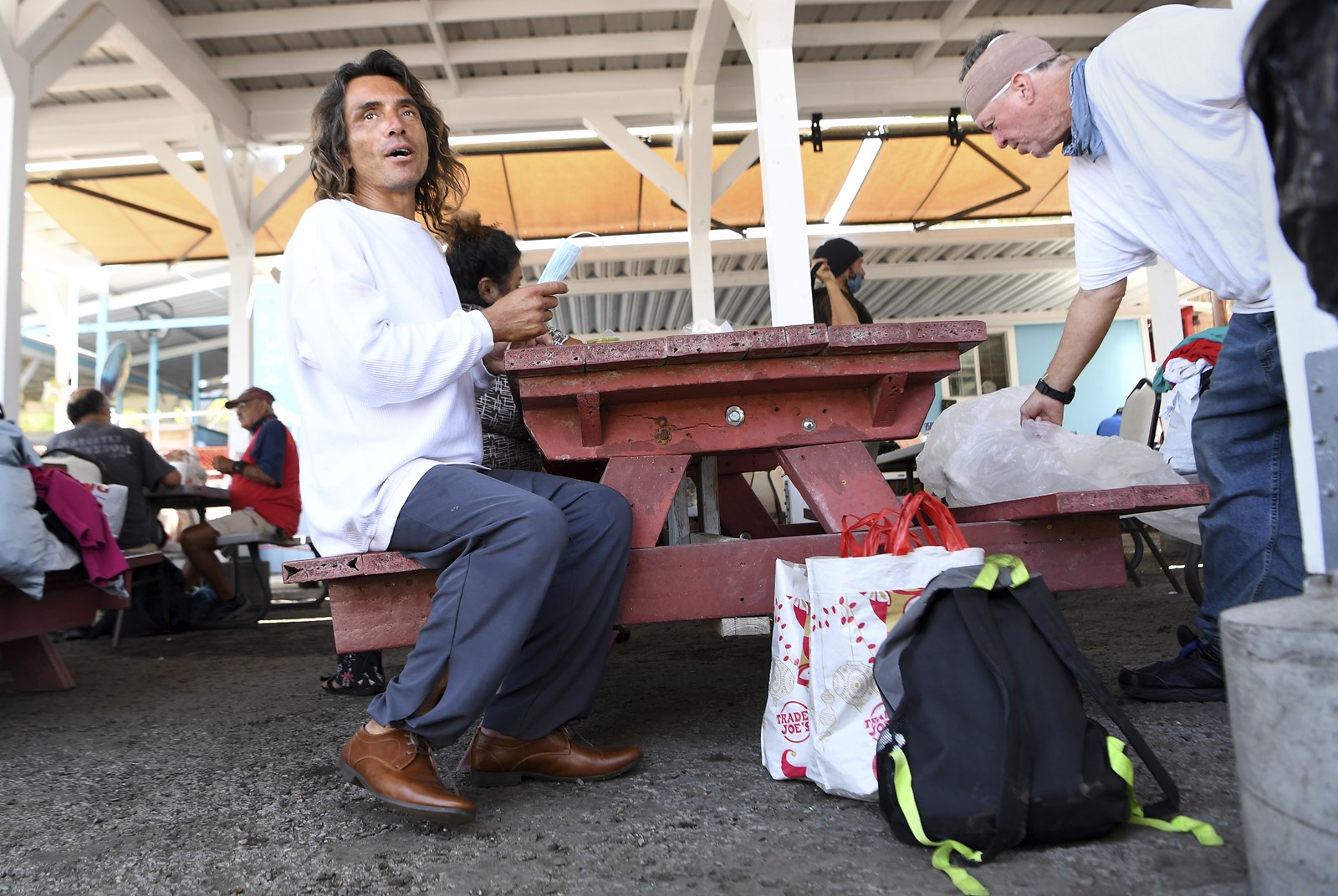


An attorney representing Mary’s Kitchen believes the city of Orange’s plan to transition away from the nonprofit is grossly inadequate and will leave homeless people without vital services.
The nonprofit has been fighting to stay open since the city sent Mary’s Kitchen a letter in June terminating its lease three years early. Mary’s Kitchen has been operating in Orange since the mid-1980s and has been at its current location, 517 W. Struck Ave., since 1994.
A nonprofit driven by donations and volunteers, Mary’s Kitchen offers services to hundreds, including three meals six days a week to anyone who seeks them out. Clothing, showers and laundry facilities are available, and hundreds of people receive mail there.
The city contends that the nonprofit has become a magnet for crime and doesn’t fit into a continuum of care approach to solving homelessness, identified as a “comprehensive regional” strategy. Brooke Weitzman, the attorney representing Mary’s Kitchen, has maintained that the city and police seem to be unfairly blaming Mary’s Kitchen for crimes that are being committed on the street where the nonprofit is located.
The city and nonprofit have been engaging in legal mediation for the last few weeks under the guidance of U.S. District Judge David O. Carter. The two parties were meeting Wednesday to discuss the city’s proposal to transition away from Mary’s Kitchen and the nonprofit’s legal response to it. Weitzman said Mary’s Kitchen has informed the city they are actively seeking a new home and would agree to move within 18 months.
“In truth, the plan submitted by the city is no plan at all,” says Weitzman’s court filing, which was submitted on Monday. “It forces more than 300 unhoused persons to travel to other cities in search of replacement services with no consideration for their disabilities, or the time involved in going from city to city to meet basic needs, all of which are now available in one location at Mary’s Kitchen.
“Because the city’s plan disperses people to other cities for the same services now provided in one location at Mary’s Kitchen, many of [Mary’s Kitchen’s] clients will likely be unable to navigate the travel involved to access services now available in one location. As it stands now, [Mary’s Kitchen’s] clients can do their laundry, take a shower, use the bathroom, pick up mail and medications, and see medical personnel all in one place. They are not forced to choose between missing meals while they travel an hour to another location to wash their clothes, or to other cities to pick up their mail.”
In a court filing last week, the city described its plan for providing transition services as Mary’s Kitchen shuts down by partnering with the county and local nonprofits to provide food, medical support, mail services, showers, laundry facilities and clothing.
“The city is prepared with its transition plan to completely take over the services when Mary’s Kitchen vacates the property and incorporate Mary’s Kitchen’s clients into the continuum of care to actually assist them with improving their quality of life,” the document says.
The city’s plan seems to center around transitioning clients of Mary’s Kitchen into a few surrounding shelters — HomeAid Orange County, Be Well Orange County, Buena Park Navigation Center, Placentia Navigation Center and Salvation Army Adult Rehabilitation Center. The city claims that most people can be transitioned into a shelter within two weeks, so it will be offering support services for a minimum of 30 days.
City staff will have an informational booth near Mary’s Kitchen from 9 a.m. to 3 p.m. Monday to Saturday for the first two weeks of the plan, and from 9 a.m. to 3 p.m. Monday to Thursday for the last two weeks. If a homeless person wants to enter a shelter, the city says in the filing that staff will connect them with the city police department’s Homeless Engagement, Assistance and Resource Team, which will work with the local shelters.
It’s unclear how many homeless people will seek out the city’s help with housing. During a city-led navigation day at Mary’s Kitchen in late August, most homeless people didn’t attend, electing to stay within the walls of Mary’s Kitchen. Starla Acosta, who has been coming to Mary’s Kitchen for about five years, said it’s because of “lack of trust” in the city.
Considering the plan appears to depend on transitioning people to shelters, it may leave out people who don’t want to be in shelter settings. Weitzman specifically pointed out in a phone interview this week that domestic violence survivors and veterans can avoid shelters due to trauma. The ACLU of Southern California filed a lawsuit last year against the shelters alleging sexual harassment and inhumane conditions. Others may avoid shelters because of COVID-19 outbreaks.
Weitzman said the shelters the city will refer homeless people to don’t have enough room, and many of them have requirements that exclude certain individuals. “The plan seems to be dependent upon the fact that somehow in zero to 14 days, some city staff person at a kiosk at the site could get everyone into services,” Weitzman said.
Her court filing addresses each of the proposed shelters and explains their limitations in placing clients of Mary’s Kitchen. HomeAid is a small shelter that accepts families with children, Be Well Orange County is a medical facility that accepts people in crisis with health insurance, and the Salvation Army Rehabilitation Center is a religious work rehabilitation program that has a number of requirements for admittance, including that its clients be 21 to 65 years old, possess a valid picture ID, a Social Security card and the ability to work eight hours a day and pass a screening process, Weitzman’s court filing says. The Placentia shelter has had few beds available in the past month, “and it is likely the same at the Buena Park shelter,” the filing reads.
The city says in its filing that it will also provide a list of local food pantries and will have a food truck on the site of Mary’s Kitchen from 9:30 a.m. to 12:30 p.m. with offerings from Second Harvest Food Bank, Abound Food Care and the Hunger Alliance. It will provide “grab-n-go nutritious food items,” the city says. However, the food truck may be suspended if the demand for it decreases, or if having the food prepared on the truck becomes wasteful. Then, gift cards will be given out to local restaurants. The one example the city provided is Subway.
Weitzman said many of the food offerings on the flier are not in Orange, and she is concerned about giving restaurant gift cards to homeless people who don’t have vehicles.
“Exactly the type of nutritional deficit that Mary’s Kitchen seeks to avoid to improve people’s health,” Weitzman said of the fast-food restaurant Subway. “And exactly the type of having to shuffle around from place to place that Mary’s Kitchen seeks to avoid by having the services on one site.”
Weitzman is also concerned that one of the food providers, Second Harvest, has agreed to provide 600 bags of food over a two-week period. Mary’s Kitchen provides about 300 meals a day, Weitzman said.
Weitzman is also left wondering what homeless people will do for food following the weeks-long offerings.
A representative for Second Harvest said the meal bags will include fruits, nuts, single-serve peanut butter, protein bars, whole wheat crackers, tuna and other items that don’t require refrigeration or heating.
Orange city spokesman Paul Sitkoff said over the phone that the meal bags will not have hot foods, unlike Mary’s Kitchen. Sitkoff also said that homeless people will be able to take three bags if they need it.
Under the transition plan, homeless people will receive a voucher to a local thrift store for clothing, and they can also visit a “pop up” clothing distribution at a local church. The city says in the filing that it will be collecting and distributing mail during the transition period, with a designated pick-up hour from 9:30 to 10:30 a.m.
