


The cost of meddling in U.S. politics
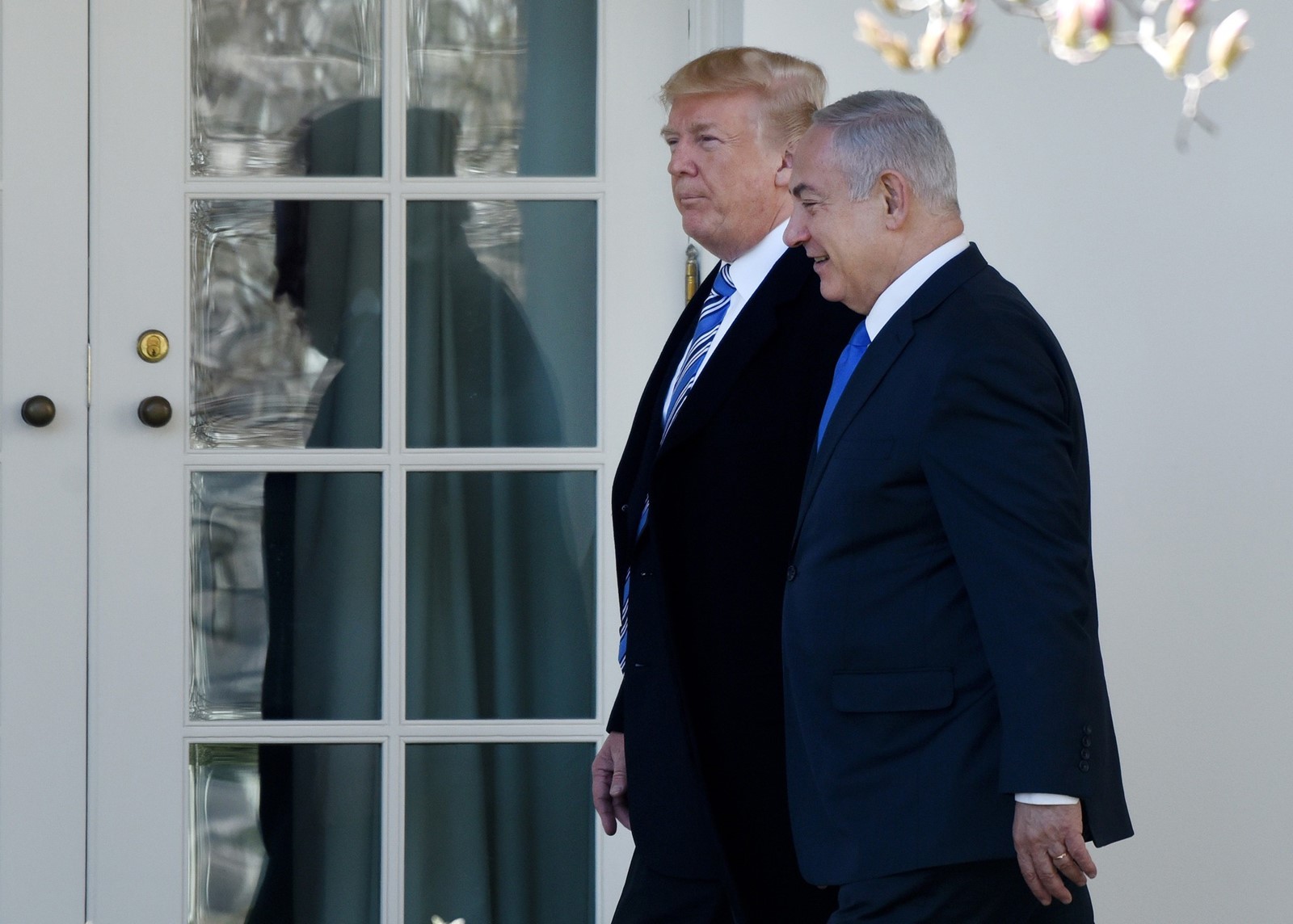


But President Trump could not resist demanding a personal favor for his reelection race, as well as a salve to his limitless ego, asking, “Do you think Sleepy Joe [Biden] could have made this deal?” As Trump’s smirk visibly dissolved, the prime minister offered only a bromide about appreciating “the help for peace from anyone in America.”
Those pallid, cautious words from Netanyahu, rather than his usual haughty truculence, offered the first inkling that he may have belatedly glimpsed the price of his strategy of meddling in American politics on the Republican side and fervently embracing Trump — a figure singularly reviled by liberals, Democrats and the vast majority of American Jews.
The prime minister’s blows against them did not start with Trump, no matter how effusive their bromance. The deterioration may have begun in 2010, when Netanyahu’s government publicly humiliated Biden by announcing an expansion of settlements opposed by the Obama administration during a visit to Israel by the then-vice president.
And, yes, Netanyahu was rewarded for his partisanship and sycophancy. Trump, the self-proclaimed great deal-maker, turned into just another tourist getting fleeced in the Levantine bazaar. He gave Netanyahu everything — a pullout from the Iran accord, movement of the U.S. Embassy to Jerusalem, support for making separate peace with Sudan, Bahrain and the United Arab Emirates while perpetuating the occupation and de facto annexation of Palestinian land. In return, Trump pretty much got zero.
But with Trump headed out of office and Republican power thus greatly reduced, Netanyahu is suddenly having to reckon with American skeptics and foes rather than the most compliant of friends.
“Jewish presence in both parties, in terms of votes and activism, is what makes a bipartisan relationship,” Steven Bayme, a widely respected analyst of American Jews and Israel, told me last week. He pointedly added that while Netanyahu did not invent tensions with liberals here, he did exacerbate them. As “the prime minister … found increasing criticism of his politics from the left, he found acceptance among evangelicals and conservatives, and that aggravated the situation,” he said.
American Jews, meanwhile, voted overwhelmingly against Trump this year, despite the president’s efforts to cajole them otherwise. Exit polling by the Associated Press gave Trump 30% of the Jewish vote and Biden 68%. (National Public Radio’s findings were almost identical.)
Far from heralding a shift of American Jews toward the Republican Party, the vote for Trump — including 70% of Orthodox Jewish votes — was more of a reversion to past percentages. Republican candidates from the early 1970s through the late 1980s routinely took
In other words, the political realignment of American Jews that right-wingers in both America and Israel have longed for, and predicted for decades, remains a mirage. Considering Trump’s extremist stances on many domestic issues dear to U.S. Jews — church-state separation, liberal immigration laws, LGBTQ rights — and his winks and nods to anti-Semitic hate groups, no one should be surprised.
At its essence, Zionism articulated and aspired to reconcile two goals: creating a Jewish nation-state like any other nation-state and serving as a beacon for worldwide Jewry. Through his love affair with Trump, Republicans and the far right, Netanyahu may indeed have shown how Israel can act in as self-interested a manner as any other country. But he has dimmed, if not quite extinguished, the beacon for a great many American Jews.
