


THE SUNDAY CONVERSATION
A dive down
the rabbit hole
Is real life actually a simulation? For filmmaker Rodney Ascher, his new documentary ‘A Glitch in the Matrix’ took a few surprising turns
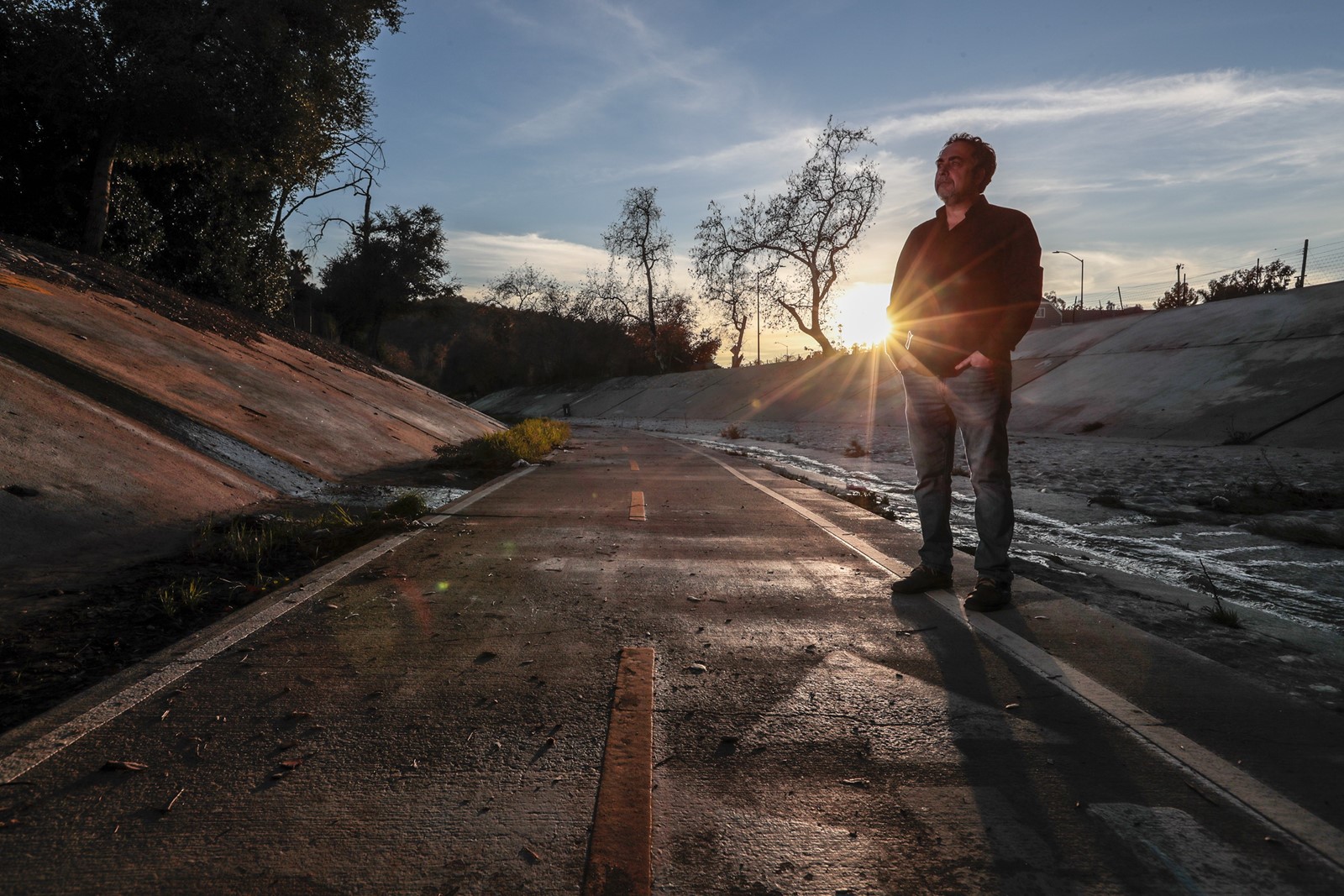


“I didn’t know that it was going towards horror; I thought it was going towards science fiction,” said Ascher, whose film, conceived before the pandemic and completed remotely during it, premiered at this year’s virtual Sundance Film Festival.
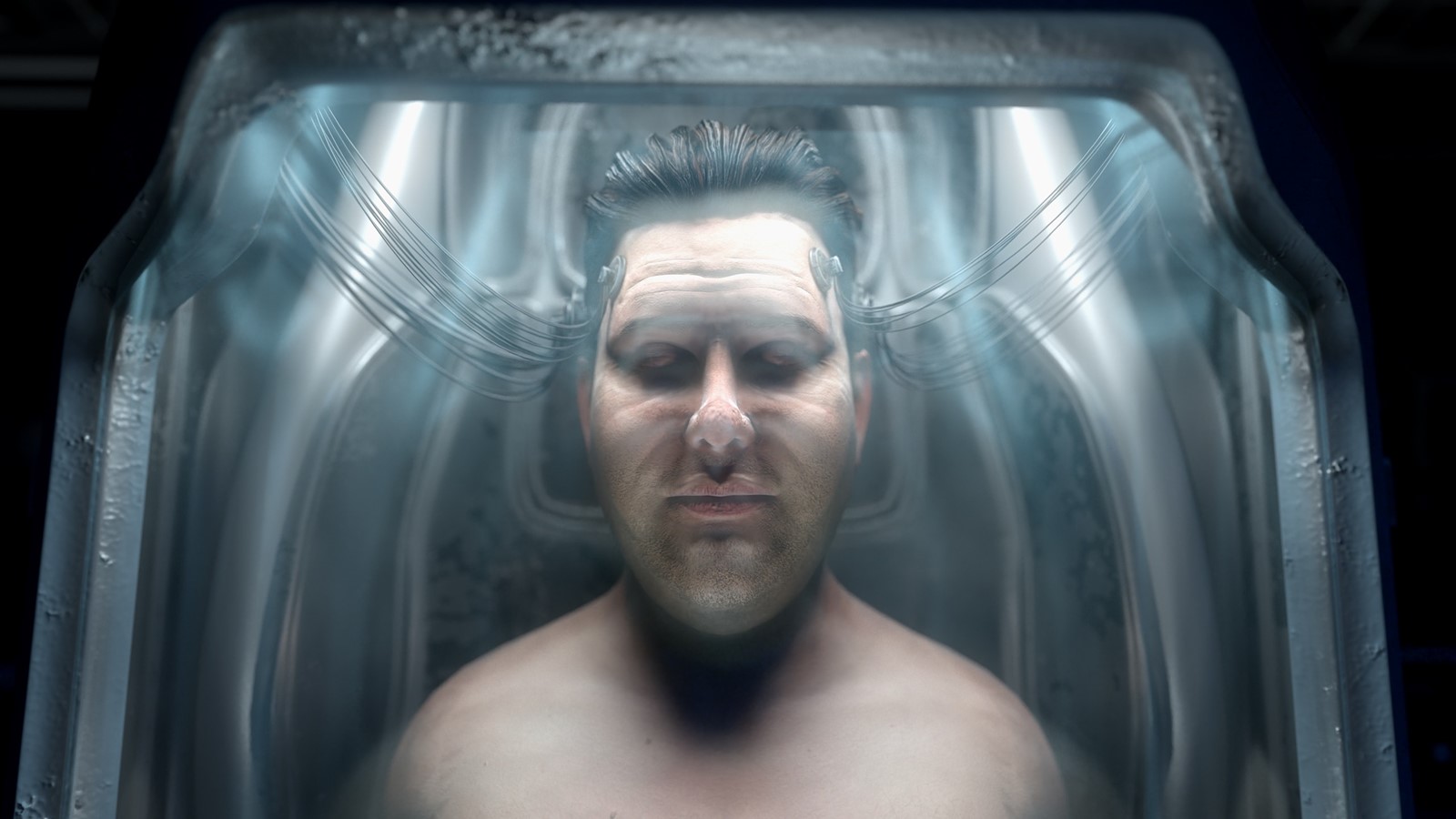
Blending sci-fi cinema and video game iconography, the academic theories of experts such as Oxford philosopher Nick Bostrom and firsthand musings from “eyewitnesses” who are transformed onscreen into otherworldly CG avatars, “Matrix” explores wide-ranging implications of simulation theory with imaginative, pop culture-infused flair.
In its most chilling and controversial sequence, “Matrix” employs photogrammetry and eerie computer animation to re-create the 2003 night when teenager Joshua Cooke, obsessed with the 1999 film “The Matrix,” murdered his parents. The case spawned the “Matrix defense,” in which a defendant claims they believed they were in a simulation of the real world. Cooke is interviewed in the film from prison, where he is serving a 40-year sentence.
Beaming in via videochat, Ascher discussed the methods and origins of the film and considered the ways it has garnered unexpected relevancy since it first began. The film is now available on VOD and in virtual cinemas.
“We’re in a world where there are not just disagreements about opinions, but disagreements about facts,” he said. “And I like to think that this project can be a good entryway into talking about that stuff — maybe as a piece of self-examination, wondering, if we’re all living in our own Plato’s Caves, how accurate are the shadows that we choose to spend the most time looking at?”
It looks like the conversation that we’re having right now, you and me, but we actually shot the interviews in 2019. It’s a very strange coincidence that a movie that is built on these Skype calls, these webcam video calls, is getting released into a world in which we’re all interacting with each other through these images. In some ways having an avatar speaking to people in these interviews, people speaking in their real-world environments, might seem a little bit like a satire of the first few COVID-19 projects that have hit. Or just the way that we live. A very strange coincidence, but not the only one.
Synchronicities, for sure. Even in the course of this film. The name that [Dick] came up with for the day that he had this big revelation in February and March of 1974, he called 2-3-7... 4. [“Room 237,” Ascher’s documentary about “The Shining,” is titled after a motif in the Kubrick film.] Philip K. Dick wrote extensively about Martian colonies, and [“Glitch in the Matrix” subject] Jesse [Orion] thinks we need to colonize Martian planets in order to get our message out to the creator. And, Elon Musk is working on a Mars colony. All three of them are thinking Mars is the place.
I’m saying Elon Musk is a Philip K. Dick-esque character. As a globe-trotting outer space executive who’s fascinated with the idea of simulation theory, the fact that he, Philip K. Dick and Jesse Orion were all speaking actively of Martian colonization, struck me as significant. His speech gave a lot of people permission, and Jesse talks about it explicitly: If somebody as rich, famous and powerful as [Musk] believes in it, maybe there’s something to it.
One of the people I spoke to for “The Nightmare” believed in simulation theory. He was the first person who turned me onto the idea that it wasn’t just an idea from science fiction movies — it wasn’t just “The Matrix,” “eXistenZ,” “The 13th Floor,” but that people were taking it seriously and that physicists were trying to see if they could look at the end of the universe and whether it broke down into a particular scale of pixel, and what that meant. That blew my mind. It was the beginning of a rabbit hole that I still haven’t been able to crawl out of.
I have no idea. I
What I take away from it is more simulation theory as a creation story, as an article of faith: that countless traditions and cultures have stories that explain how we got here, where the universe comes from, and in many ways this could be just another one of them. I was surprised going into this and talking to people, how quickly it became a religious question — not just, “Is the creator some fifth-grader cramming for their exam over the weekend on another planet or in the future?” but, “If this is a simulation, what does that mean about our relationship to other people?”
Because the first fork in the road is, are we playing “Pac-Man” — where you’re the only player and everybody else is a phantom ghost — or is this “Fortnite,” where every character is tethered to a real human being? Where you come in on that fork, whether other people are real too, has extraordinary ramifications for how you live. I see it in the people who mistreat service workers because they’re an obstacle along the way of getting what they want. How that phrase “NPC” [non-player character] has terrifying connotations of thinking of people that way, and that rippling out, was one of the surprises of this project.
In the early days I had a big whiteboard with every idea I could think of related to simulation theory. One of the early ones was the “Matrix defense,” the fact that people had used simulation theory as part of a criminal defense to explain an insanity defense that they weren’t liable for their actions because they didn’t realize the real-world implications; they thought they were living in a simulated reality. I wanted to get something about the “Matrix defense” into the film, and there was really only one person who used it. [Cooke’s lawyers at the time considered using the defense; he ultimately pleaded guilty.]
[Producers] Rebecca Evans and Colin Frederick found Joshua, and Joshua’s at a place in his life where he’s just written a self-published book on Amazon and he’s trying to reach kids to try to help prevent them from repeating his mistakes, trying to learn from what he went through and be a better person, work on himself and reach out to kids who are in a similar space.
Some people have taken exception to that story’s inclusion in the film. I get it. It’s a pretty troubling sequence in a lot of ways. As I was working on the film, it seemed more and more important to go from abstract speculation to nuts-and-bolts reality, and to especially drill down into some of the real-world consequences of this kind of thinking and the dangers of it. I still find it perfectly fun sometimes to bat simulation theory around and think about some of its implications, but there can be a real danger in disassociating and becoming alienated from reality, and not necessarily believing in the world around you or the people around you ... you look around where we are today; people building up false ideas about reality has dangerous consequences all around us, in a thousand different ways.
When it came time to talk about the murder itself and what that was going to look like, I didn’t want there to be animated cartoon characters in it in a way that would make it silly. That would be wildly inappropriate even by my standards, which might be looser than other people’s.
The idea of it was not looking at the night through his eyes as he moves through the house as he describes it but more of him 15 years later remembering it — and that it’s a memory that’s starting to fray around the edges.
And it is a terrifying story. The terror is about making a horrible mistake. It’s not about danger happening to you, it’s about you doing something that you can’t undo.
Clearly the last couple years have shown us the dangers of people creating worlds that, however much they’re at odds with reality, they’re certainly at odds with other people’s realities. We’re in a world where there are not just disagreements about opinions, but disagreements about facts. And I like to think that this project can be a good entryway into talking about that stuff — maybe as a piece of self-examination, wondering, if we’re all living in our own Plato’s Caves, how accurate are the shadows that we choose to spend the most time looking at? Assuming they’re telling us the truth about the world around us. How carefully are we vetting where they’re coming from, or whether they were created in good faith, by journalists working their asses off communicating to us what they find out there, or cynically by folks who are trying to manipulate us to other ends?
There are specific political controversies that that talks about today. But I’m perfectly happy for them not to be directly in the film, so that as time goes on you can substitute the next three or four horrifying things that are waiting for us.
