


Federal clash with state over air rules escalates
House defies judge in moving to reverse California maritime emissions standards.
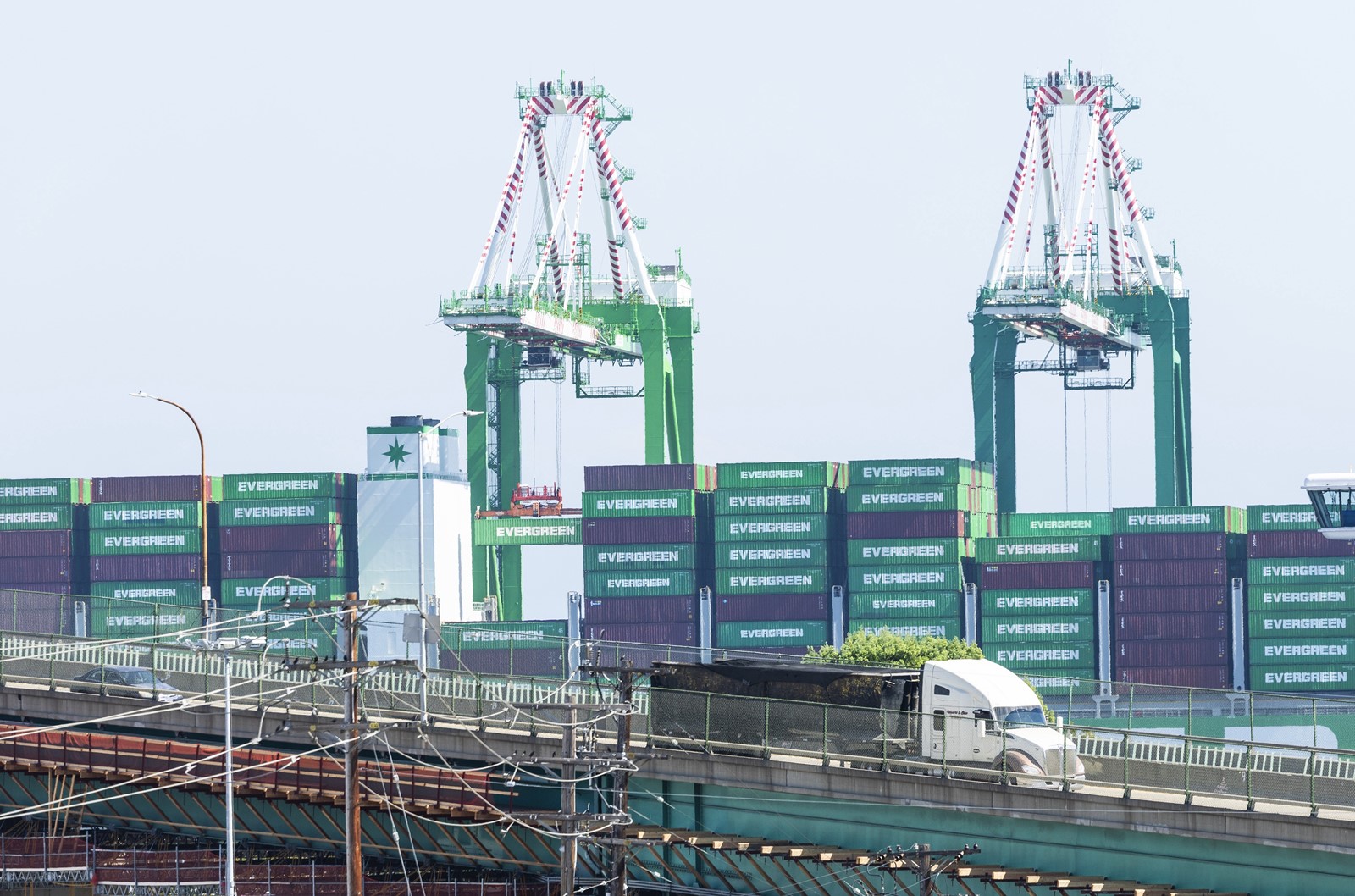


Congress recently challenged California’s authority to regulate air pollution from cargo ships and large commercial boats, opening the door to dirtier air in portside communities.
The U.S. House of Representatives last week narrowly voted to take away the ability of California to force large ships to run on electricity when they’re in port, instead of running on their giant diesel engines. A second vote also sought to end requirements for cleaner engines on some commercial boats.
These regulations were designed to eliminate unhealthful pollution near harbor communities, such as Long Beach and Wilmington. The twin ports of Los Angeles and Long Beach are the largest fixed source of smog-forming air pollution in metropolitan Los Angeles.
The votes — to revoke federal waivers that allow California to regulate maritime pollution — took place despite a federal judge’s scathing ruling that the way the Trump administration was pursuing the deregulation is not legal.
They were the latest attempt by the Trump administration and Republican lawmakers to roll back California pollution regulations and do away with the state’s authority to adopt vehicle pollution controls stricter than the federal government’s. Last year, the president and Republican-majority Congress revoked three other federal waivers, including one that would’ve allowed California to effectively ban the sale of new gas-only cars by 2035.
The Environmental Protection Agency has been initiating these changes, and in June, it sent several more waivers for Congress to review, prompting the California attorney general’s office to file a lawsuit.
It was that lawsuit that led to the strong words from D.C. District Judge Beryl Howell on Sept. 2. Ruling against the EPA, she said its broad power “does not mean the agency has the right to do whatever it wants, let alone take action that is likely unlawful, arbitrary and capricious...”
Congress voted to reverse California’s authority anyway. The bills still need to pass the Senate and President Trump’s signature to become law, yet the way they proceeded has set off a heated debate over whether the result would be valid.
Ann Carlson, an environmental law professor at UCLA, said the dispute raises novel legal questions.
“We’re in uncharted territory, here,” Carlson said. “And that includes complicated questions about separation of powers. We have the judiciary, the executive [branch] and Congress all involved in questions of the exercise of administrative authority.”
Under the Clean Air Act, California can adopt vehicle emission standards stricter than the federal government, so long as it obtains waivers from the U.S. EPA.
The Trump administration has argued these federal waivers are “rules” that were never properly brought before Congress for review, so they may be overturned via the Congressional Review Act.
But the nonpartisan U.S. Government Accountability Office and the Senate parliamentarian both maintain the federal waivers are “orders,” which cannot be overturned by Congress. Howell agreed with them, saying the EPA either intentionally misled Congress or unlawfully reclassified the waivers as “rules.”
“Such gamesmanship may seem like a clever policy move, but undermines honest compliance with the law, which is what Americans should expect from executive branch agencies,” she wrote.
However, Howell acknowledged that a federal court “lacks power” to prevent Congress — a coequal branch of government — from voting to repeal the waivers. It remains unclear if the case will appear before Howell if the bills become law.
The two maritime-related waivers drastically cut smog-forming emissions and cancer-causing diesel exhaust near California ports.
Numerous environmental groups, angered by Congress’ votes on the waivers, said they were confident the state’s authority would prevail in a Senate vote or upcoming court rulings.
“Republicans in Congress are working overtime to please Trump and give polluters a free pass, all while knowing it won’t do anything to address the soaring gas prices and energy bills everyday Americans are facing,” said Aaron McCall, an organizer with California Environmental Voters.
“This isn’t over,” he added. “California is fighting back against this blatant and illegal attack.”
