


How to talk with children about
a school shooting
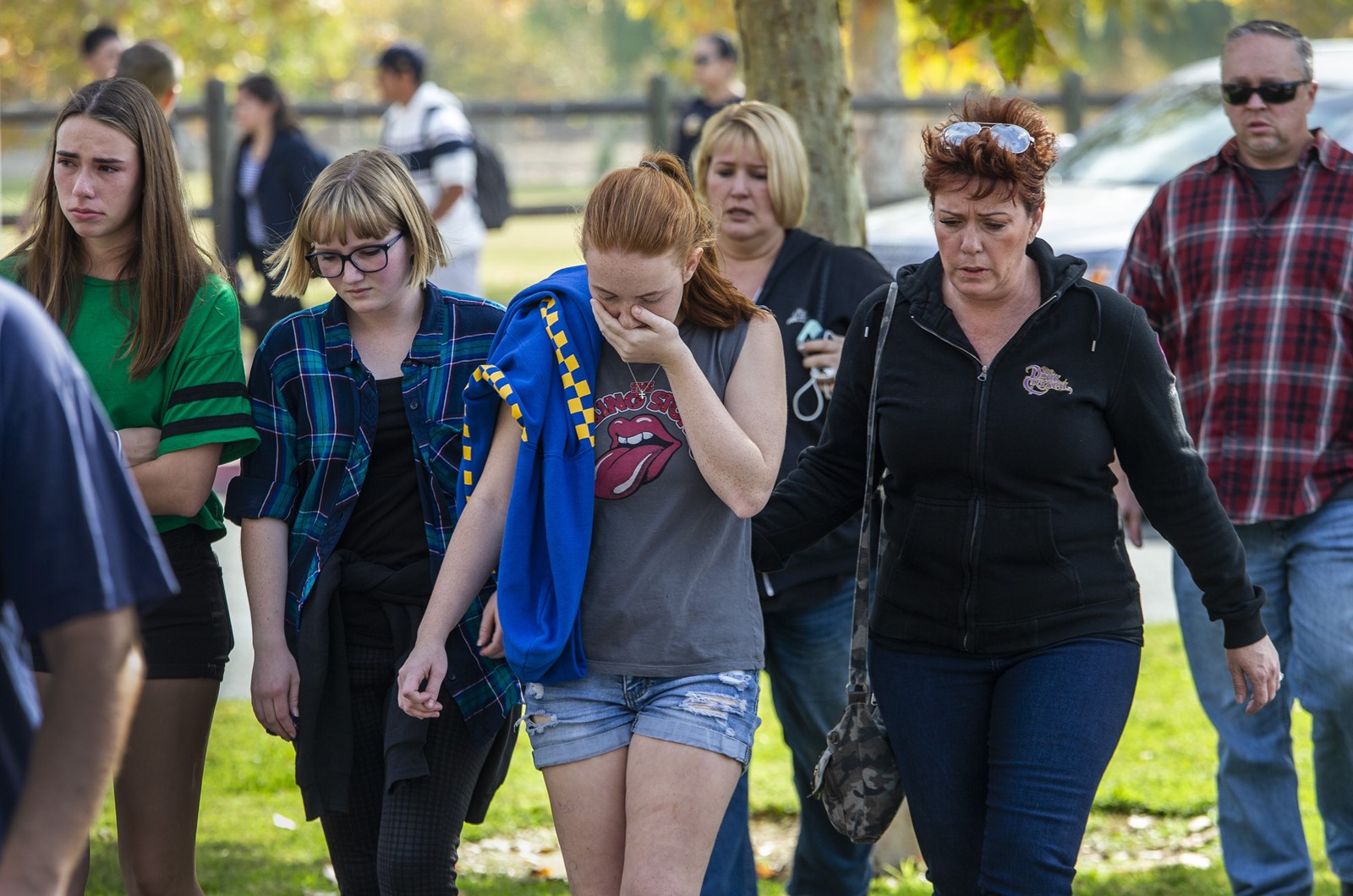


The shooting at Saugus High School in Santa Clarita on Thursday touched off intense, heart-sinking fear among many teenagers who ran for cover, barricaded classroom doors with tables and chairs, and hid in closets. Later, as they were reunited at a park, evacuated students and parents collapsed into one another’s arms in long, tearful hugs.
“Fear made it feel like we were waiting in silence forever,” said Andrei Mojica, 17, who had been with his AP government classmates during the lockdown and had prepared to use a fire extinguisher as a weapon if needed.
“How do we recover and step forward past this incident?” Andrei asked.
As the Saugus community deals with the aftermath of the shooting, which left two students dead and three others wounded, parents and other trusted adults can help them cope. Here are some suggestions from the National Assn. of School Psychologists and other mental health experts on how to do so:
“Help them process whatever they want,” Brock said. “At the same time, especially in the immediate aftermath of an incident like this, [it’s important] not to force the issue. You simply acknowledge the event.”
Ask children if they have questions, he said, and let their questions be your guide.
Younger kids may not be as worried. But teenagers are likely to know more and have concerns, so it’s better to address the subject directly with them rather than avoid it, said Carol Vidal, a child and adolescent psychiatrist at Johns Hopkins University.
“The most important thing is not to minimize any sense of anxiety that they may have,” Vidal said.
“The longer the threatening circumstance continues, or just that [survivors] believe they’re in danger, the harder it’s going to be to recover,” Brock said.
Parents can make sure kids understand that the perpetrator of the Saugus shooting cannot do any more harm. With younger children, adults can draw attention to all that adults do to keep them safe, such as locking doors and conducting emergency drills.
Parents also can and should tell their children that school is a safe place for them. “It’s an objective fact. It’s reality,” Brock said, citing national data that shows physical fights, violence and weapons incidents are all down in schools since the early 1990s.
“Today these words and these statistics may ring hollow because we just had a terrible tragedy, but pretty much 99% of 5- to 18-year-olds that are homicide victims die away from school,” Brock said.
“They might need the information more in pieces than all at once,” she said.
For youth in middle or high school, more detailed conversations will be appropriate. The best place to have that conversation depends on the teen — it could be in the car or while a friend is present, instead of just sitting and talking about the event one on one.
Older kids will understand that difference, but prolonged exposure to graphic images and details is harmful to them as well.
Social media doesn’t necessarily have to be a bad thing, Vidal said, citing the example of the students affected by the 2018 shooting at Marjory Stoneman Douglas High School in Parkland, Fla.
“You can use it to activate people ... in political matters and do events to help them socialize with other people. It [can give] them a purpose,” she said.
But parents should make clear that they are handling their own emotions and that their child does not need to be strong for them, said Jonathan Vickburg, a licensed marriage and family therapist who treats kids dealing with trauma.
“We can model that we can feel disregulated at times, too, but it’s not for kids to take care of parents,” Vickburg said.
“What happens after any traumatic event is it feels like our lives are going to be disrupted forever,” Vickburg said. “Routine can help us feel regulated again, whether it’s an adult or a kid.”
That may be difficult in the hours and days immediately after a traumatic event, he said, but parents can still help their children put some order to their days — for example, by continuing to have dinner with family, doing homework, or hanging out with friends.
Giving teenagers in particular extra time to be with their friends is important. It helps them establish normality and connect to their support network.
The majority of children are resilient and will not experience long-term symptoms after a one-off event, experts said. Immediately after a violent incident, they may experience anxiety and fear. Some people closer to the incident may also have difficulty sleeping or be jittery.
Watch for changes in behavior, mood, appetite or sleep. Professional help may be necessary when such symptoms persist over time and start to affect how a person functions, experts said.
More information on dealing with emotional distress related to violence and other disasters can be found at the U.S. Department of Health and Human Services Disaster Distress Helpline, which provides a 24/7 crisis counseling and support at (800) 985-5990.
