


Why we should teach
all girls to play poker
Calling bluffs. Taking risks. There are many useful life lessons to be found in the cards.
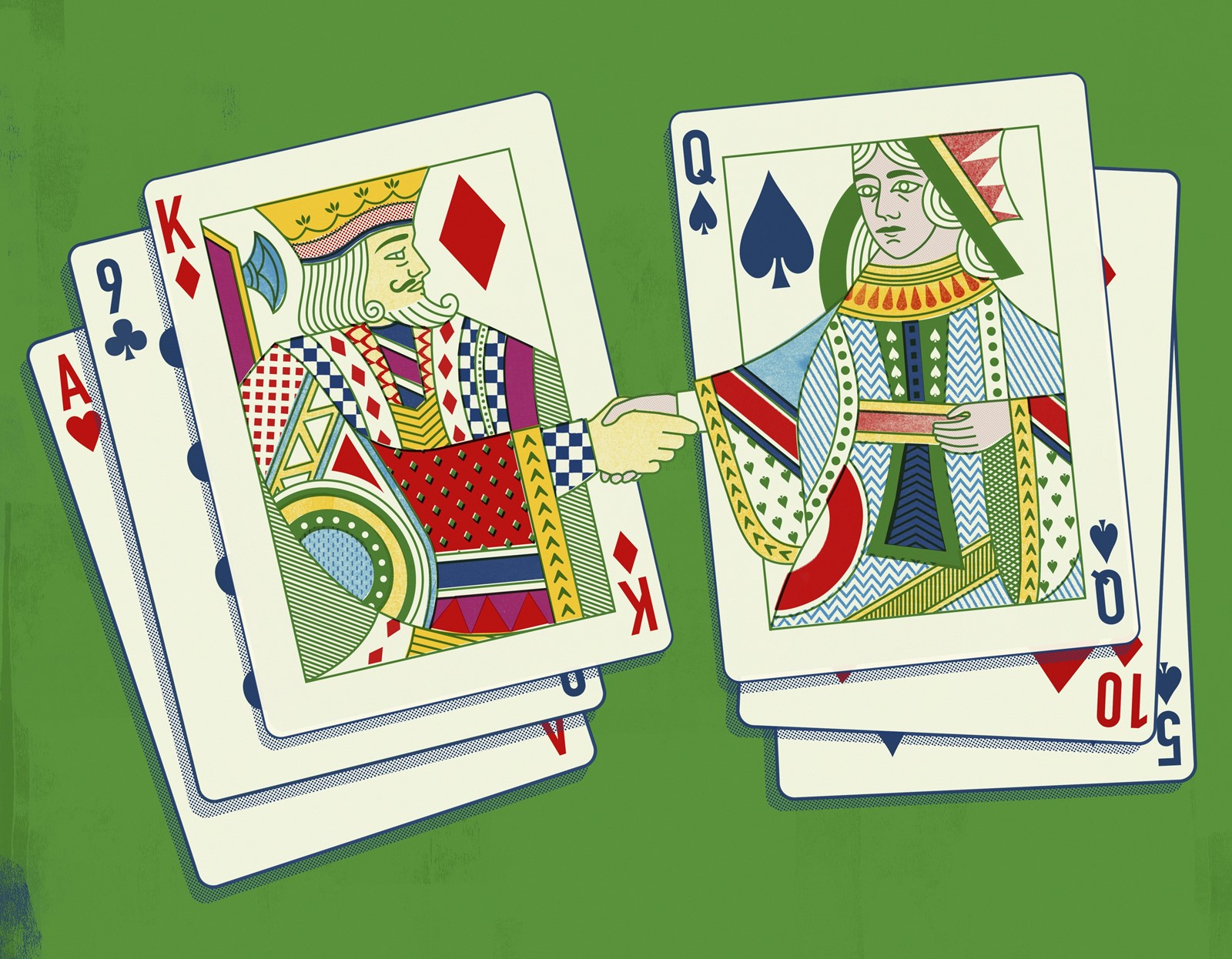


Parlee, who died in June, might be disappointed to learn that, 33 years after her article, women still aren’t flocking to poker tables. Just two months ago, the World Poker Tour, a preeminent organization promoting the game, hosted a summit of female players at the Bicycle Casino in Bell Gardens to discuss how to attract more women to card tables and tournaments.
Despite an explosion of interest in the game — due in large part to televised tournaments that allow viewers to see who is holding what cards — participation by women is still low. Seedy, smoke-filled card clubs have been replaced by shiny, glamorous, smoke-free poker rooms, but it’s still a mostly male arena.
Poker is littered with aggressive or masculine terms such as “firing at the pot,” “flopping the nuts,” “I fired a bullet,” “folded a pair of bitches (queens),” and others. At the end of tournaments, erotically dressed women carry out the cash and dump it on the table, bending over oh-so-slightly to suggest they could be part of the prize.
Personally, as a kid I learned to count from the numbers on playing cards, and by my teens joined in penny-ante poker games with my parents and their friends. But even I never stepped inside a real card club until I was in my 50s. Today, I rarely see more than a handful of women when I play. Clearly some women still find sitting at the poker table akin to socializing in a men’s locker room.
Men do not give up their dominance of poker easily. When I served on the City Council in Long Beach, I learned there was a monthly poker game at which the mayor, president of the Chamber of Commerce, the publisher of a local paper and other men played. I asked if I could join. Ignored, I asked again and was told, “It’s a man’s game with cigars.”
Although there are ladies-only professional poker tournaments, men have protested and crashed the tournaments, signing up to play themselves. At one popular women’s tournament in 2010, a professional male player came in drag. Another man brought a tampon which he displayed at the table as a “card protector” during the tournament.
Poker is a game of skill, not luck. Many winning hands are nothing but a bluff by a player who has learned how to read the other players and who has the confidence to mask the weakness of her own cards.
As Parlee reminded women in 1985, poker works a lot like life in general, especially when it comes to relationships. Recognizing a no-win situation in cards (or in a relationship) and getting out of it by folding a hand (or leaving) is also a critical skill.
With the caveat that poker can cause gambling problems, I think all girls should be taught to play poker — not because they need to enter high-cash tournaments, but because the game is a way to practice taking risks, size up your own strengths, manage money (chips) and know when to call out others on their bluffs.
Dads who know poker should engage their daughters and teach them the rules and strategies for winning. If done correctly, the Girl Scouts could offer senior scouts a badge in “life lessons from poker.” Girls who complete the badge could be eligible to play (for fun) in a Girl Scout tournament. Who knows? They might even invite the boys.
No matter the venue, it’s time to deal girls in.
