


Lawyer’s videos of police use of force go viral
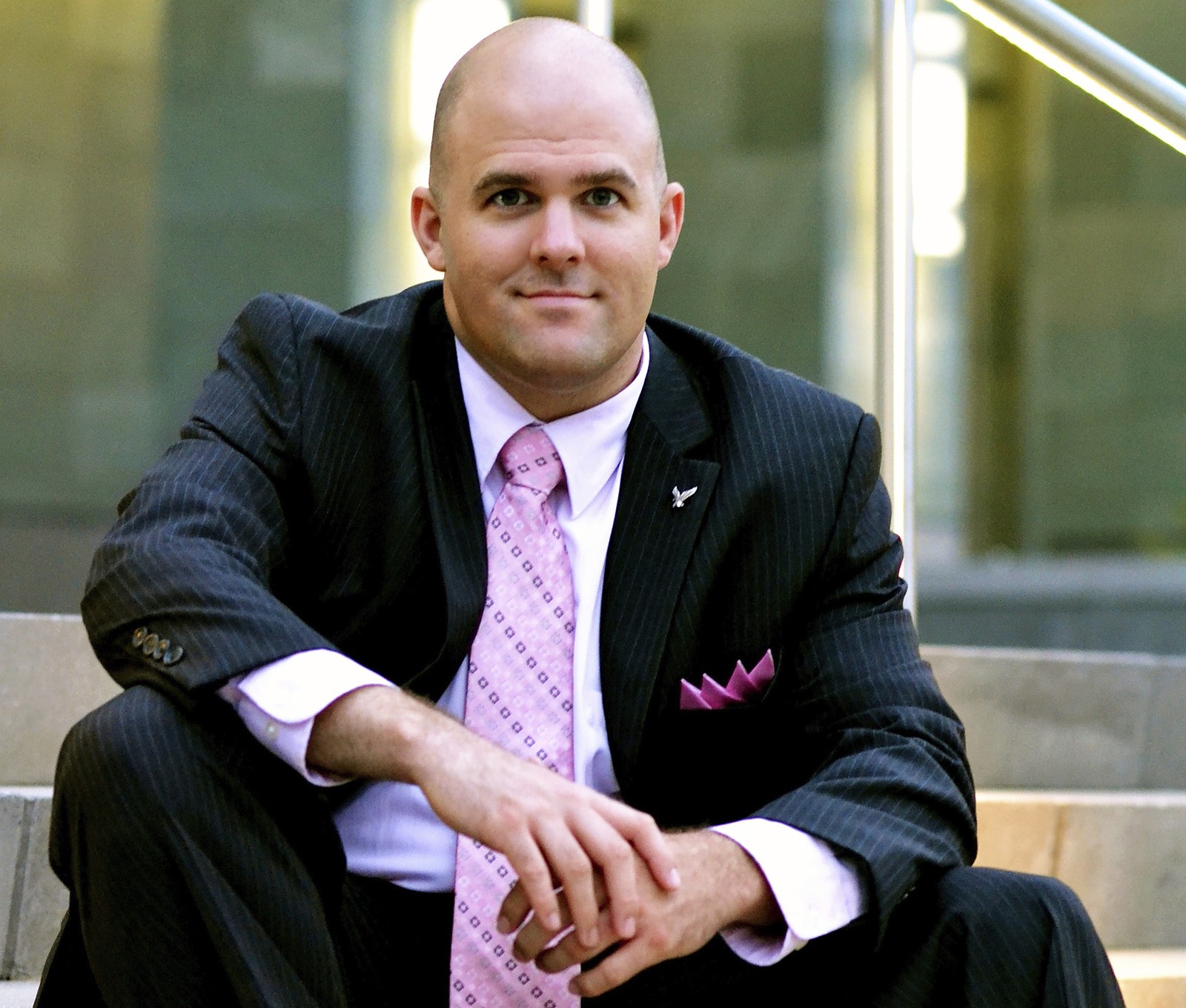


On May 30, T. Greg Doucette, a criminal defense lawyer from Durham, N.C., tweeted out a compilation of 10 videos he’d seen of police using force against protesters in the wake of the death of George Floyd. He had no idea the degree to which things would snowball from there.
As Doucette’s Twitter thread went viral, a flood of videos began pouring in from around the country, showing police shoving, kicking, pepper-spraying and otherwise using force against peaceful protesters. (One video Doucette shared involved Times reporter Molly Hennessy-Fiske being hit with rubber bullets while covering a peaceful protest in Minneapolis.)
As of Sunday, Doucette’s thread had reached nearly 400 clips, and he finds himself struggling to keep up.
In one week, the original tweet that started the thread has been retweeted nearly 80,000 times, while Doucette’s follower count has grown from about 30,000 to more than 100,000. A separate thread he posted on potential steps to address systemic racism in policing has been retweeted more than 3,000 times.
“My phone has been a mess,” Doucette, 39, said in an interview Friday with The Times. “I’ve got close to a thousand direct messages that I haven’t even had a chance to open yet. It’s crazy.”
With protests showing no sign of slowing and the debate over the law enforcement response growing fiercer and more polarized by the day, Doucette spoke with The Times about why he started his thread, the role of social media in making sense of this moment and where he sees things going from here.
I do criminal defense work here in North Carolina, and I’m also licensed in Texas. My practice is criminal defense and 1st Amendment law. I have been sharing stuff on social media about police misconduct for more than a decade. I’m politically conservative, was a Republican for most of my life and left in 2016. I’ve always had a real problem with government abuse.
When I’ve shared this stuff in the past, when you do it one [video] at a time, you get the same responses: “The victim was no angel,” “The officer was just one bad apple,” blah, blah, blah.
So I did it as just short of a dozen, thinking, “Hey, this is everywhere. It’s a problem,” and I decided to thread it onto Twitter. Once I started doing that, more people started sending me stuff. As the list got longer and more people tweeted it out and more people sent stuff in, you ended up with this feedback loop.
What struck me about the George Floyd video was two things: One was the sheer span of time. It’s normal seeing people kill folks, but it’s usually over three or four minutes, not nine minutes. And then there’s a spot in the video where [one of the officers] tries to find a pulse and says he can’t find one. But [Officer Derek] Chauvin doesn’t move. He doesn’t say, “Let’s get EMS. Let’s do CPR.” He just stays there with his ... knee on the guy’s neck.
I saw that, and I was like, “This is terrible.” But there have been so many terrible videos over the course of any given month, and it doesn’t really pop off like this.
You saw stuff in Ferguson [Mo.] in 2014 [over the shooting of Michael Brown]. In 2016, you had Philando Castile and Alton Sterling killed within a day of each other. Then ... you had Ahmaud Arbery, Breonna Taylor — stuff that was truly screwed up to any normal, thinking person. There have been protests, but the protests were localized. We haven’t had this kind of nationwide outpouring.
That was definitely one of them, partly because that guy reminds me of my grandfather. The one in Indianapolis when they’re groping the woman’s breasts and she breaks away and then they’re beating the ... out of her. There’s one where you’ve got a 16-year-old boy standing on a hill, and they sniper-shoot him in the head from a distance.
There’s just so many. It’s absolutely brutal.
That has been part of the standard response when I’ve shared this stuff for over a decade now.
For a lot of these, you have footage of the whole thing, start to finish. You see a peaceful protest, and then the police say, “OK, we’ve had enough 1st Amendment for today. Let’s go ahead and start shooting people.” I think that argument is just specious garbage. You have so many videos in so many jurisdictions over a very small time span that people are kind of realizing, “OK, yeah, what we’ve been fed over the past however-many decades is, in fact, garbage.”
There were protests in Durham, but they were fairly small compared to L.A. or some of these other spots. But no, I have stayed back because you also have the pandemic going on, and my fiancee works in medicine, so I don’t want to risk getting her infected as I’m doing this stuff.
The short answer is, I don’t really know. Part of the problem is that even though it’s politicized, both Democrats and Republicans have been beholden to police for years. From the Republican side, they love cops, because cops brutalize minorities and they’re racists. On the Democrat side, cops are public employees and they have unions, so they tend to let that go along too.
You look at North Carolina as an example. We have some pretty absurd protections [for police] here, including a bill passed in 2016 where any video that an officer has recorded, whether it’s a body cam or dash cam, is no longer a public record and you have to go through an elaborate process to have police video released. That bill passed with bipartisan supermajorities in both chambers.
Whether it’s because of political interests or fecklessness, politicians on both sides of the aisle have been uniformly useless when it comes to regulating police misconduct.
My hope is that some of that earth shifts beneath these politicians’ feet, and they finally take some action. But I’m also cynical, because I’ve been posting about this stuff for years, and nothing has happened. You’re going to need either new politicians, or existing politicians need to grow enough of a spine that they’re willing to do what’s best for the public and not what’s best for the police.
I think he makes it worse, but it existed before him. I mean, even under [President] Obama this was happening all the time.
But in a moment like this, one thing that Obama did that Trump does not is that Obama at least tried to tamp down public sentiment. When you had the Ferguson [protests], he gave that speech trying to get people to calm down. Trump is like, “Law and order! Dominate the streets! When the looting starts, the shooting starts!” The absolute opposite of what you should say.
This is stuff that we should have learned. If you look at Afghanistan and Iraq, urban pacification is something that the military has studied, and when you crack down harder and harder on the civilian populace, more and more people rebel. It’s common sense at this point, but [Trump] is congenitally incapable of leadership and manifestly unfit to hold the office, so that’s not what we have.
