


New rules for foreclosure purchases
Law gives a leg up for owner-occupants, governments and nonprofits bidding against investors.
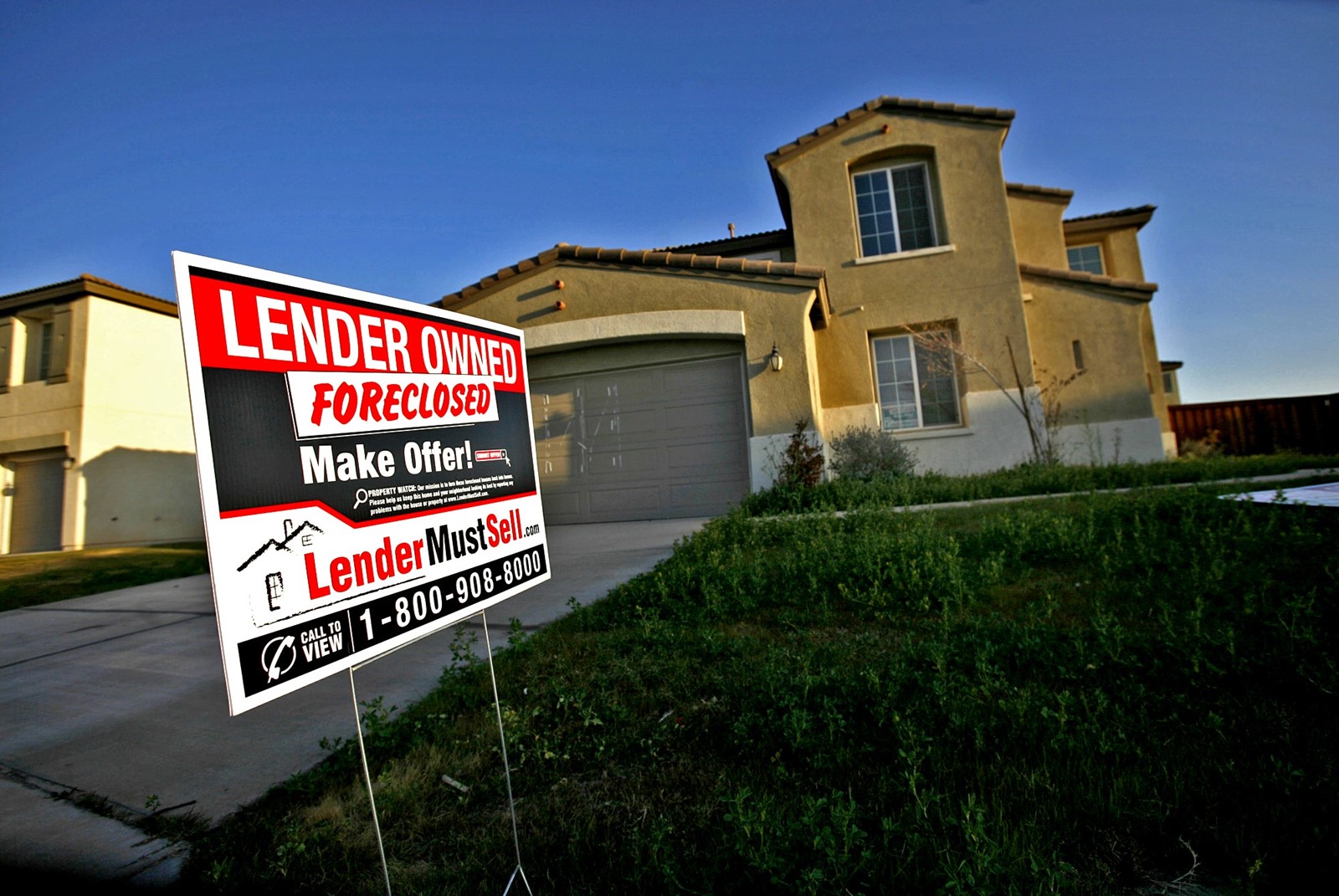


The new rules apply to one- to four-unit properties sold at foreclosure auctions. If an investor wins one of those homes at auction, then people who want to live in it, as well as nonprofit organizations and government entities, get 45 days to submit competing offers.
If the home is a rental, the tenants living there could win by matching the investor’s offer. Other would-be buyers must offer more than the investor.
Known as SB 1079, the law takes effect Jan. 1, 2021.
State Sen. Nancy Skinner (D-Berkeley), the bill’s author, said her goal was to make it easier for individuals and affordable-housing groups to compete with investors.
“Homeownership is the primary way people have to build up generational wealth,” she said. “When we have rules that give advantage to a corporation ... then that dream is just not available.”
The manager of the foreclosure auction is required to maintain a website that details the highest bid at the auction and how to submit competing offers.
But if you are a traditional home buyer, be careful, experts say.
Maeve Elise Brown, executive director of Housing and Economic Rights Advocates, recommended working with an experienced real estate agent who understands the foreclosure process.
There is a chance of additional liens on the property that could raise questions over who is the true owner, leaving the buyer vulnerable to litigation.
It could also be impossible to inspect a house for defects before buying it, especially if someone still lives there.
The buyer would be responsible for carrying out any necessary eviction.
“I am aware of clients who bought foreclosed properties in the Central Valley that were money pits,” Brown said.
Finding financing could be tricky too. Dustin Hobbs, a spokesman for the California Mortgage Bankers Assn., said the rules call for offers to be submitted in full, in cash or cashier’s check, which means the buyer would need their lender to hand over money outside the typical escrow process.
Hobbs said borrowers might have some luck with a small bank or credit union if they’ve already built a good relationship there, but “I don’t think a traditional mortgage lender would lend on this.”
They’d like to, but funding could be an issue. Amid the pandemic-fueled recession, many are strapped for cash, and the new law doesn’t earmark any money for these home purchases.
“We are creating good policies that don’t come with resources,” said Oscar Monge, associate director of TRUST South L.A., a community land trust that buys land with the goal of creating affordable housing.
Los Angeles City Councilman Mike Bonin, who represents many Westside neighborhoods, said he wants to tackle that problem. Bonin said he plans to submit a motion in the coming weeks that asks city staffers to identify funds the city could use to buy homes that become accessible through the new law.
He said he sees an opportunity to use funds the city already has for combating homelessness, as well as future funds that may come once President-elect Joe Biden takes office.
“What we want to do is to address the commodification of housing and treat it more like something that needs to be provided,” he said. “Something that needs to be lived in, rather than invested in.”
Kevin Stein, deputy director of the low-income advocacy group California Reinvestment Coalition, said his organization is encouraging banks to meet their obligations under the federal Community Reinvestment Act by lending or giving grants to community land trusts. With that money, those community land trusts — which take land off the private real estate market so it can be used for affordable housing — could buy foreclosed homes.
TRUST South L.A., for example, would like to purchase homes and work with tenants or the defaulted homeowner to let them stay in the properties, Monge said.
In the San Francisco Bay Area, the Oakland Community Land Trust recently took a slightly different direction.
It purchased an investor-owned home after a group of homeless and housing-insecure moms took it over late last year in a protest that drew national attention.
Heavily armed sheriff’s deputies evicted the women, collectively known as Moms 4 Housing. But after negotiations with Gov. Gavin Newsom and Oakland Mayor Libby Schaaf, the investor, Wedgewood Inc. of Redondo Beach, took the property it had gained in a foreclosure auction and sold it to the land trust, which will use it to house homeless mothers.
The new law gives nonprofits a streamlined way to purchase such properties. But that’s not nearly enough, said Carroll Fife, a housing activist who helped the mothers and just won a seat on the Oakland City Council.
“Without [additional] revenue sources, we are going to be in the same position” as during the last recession when many owner-occupied homes were turned into rentals, she said.
Michael Flynn, a mortgage attorney at the law firm Buchalter, said that by requiring a 45-day window for competing offers, the new law could create additional costs for lenders that are foreclosing on properties — costs they may pass along in the form of higher interest rates to the broader market.
Lori Gay — whose organization, Neighborhood Housing Services of Los Angeles County, has a long history of buying run-down properties, rehabbing them and selling them at affordable prices — likes the law. But she’s worried about how consistently it will be enforced. In most cases, enforcement is to be handled through civil litigation.
Gay said she’s already talking to investors and would like to make offers of $1 more than what an investor bid at auction so as to keep the properties in the community.
“We’d like to not see corporate investors gobble up the bulk of the properties,” she said. But “if we showed up on [SB] 1079 to execute with the ‘highest bidder plus a dollar’ kind of attitude, who is going to check that it’s happening? Or am I going to have to fight on every transaction?”
