


Burqa: Sartorial barometer of change
Sales temporarily rose in Kabul’s bazaars. But the Taliban’s decrees aren’t entirely clear.


But then the Taliban came to town.
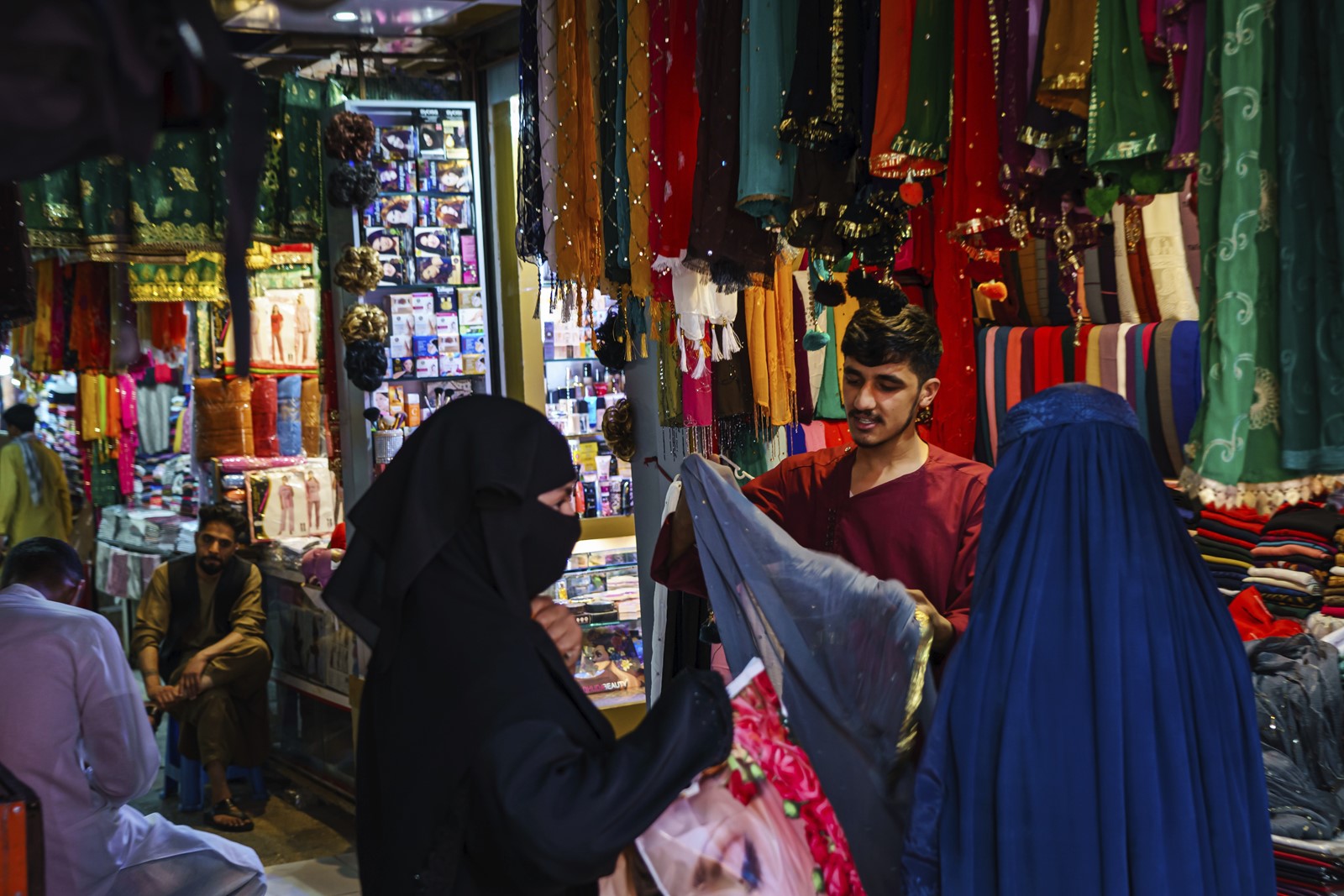
Fahruddin Saib Zada used to sell about a dozen a day of the all-enveloping garments, usually in the familiar sky-blue, although they’re available in a range of colors. But in the first two days after the insurgent takeover of the capital on Aug. 15, his sales jumped to 40 a day.
When the Taliban last ruled Afghanistan, a five-year reign that came to a close in 2001, women risked being whipped by Taliban enforcers if they dared venture out without donning a burqa, the full-body, full-face covering whose mesh eyepiece offers the viewer a blinkered, straitened view of the world.
To a watching world, the garment became an emblem of Afghan women’s subjugation under Taliban rule. But even once the movement was driven from power, the burqa never went away, especially in the hinterlands and in conservative cities such as Kandahar, where it remained a common sight.
This time around, Taliban officials have not decreed the burqa as mandatory — only the hijab, a head covering, and non-revealing clothing.
But like many of the group’s more moderate-seeming pronouncements since taking over — including a pledge to respect women’s rights, but in the context of sharia, or Islamic law — dress requirements are open to interpretation, full of caveats and could change over time.
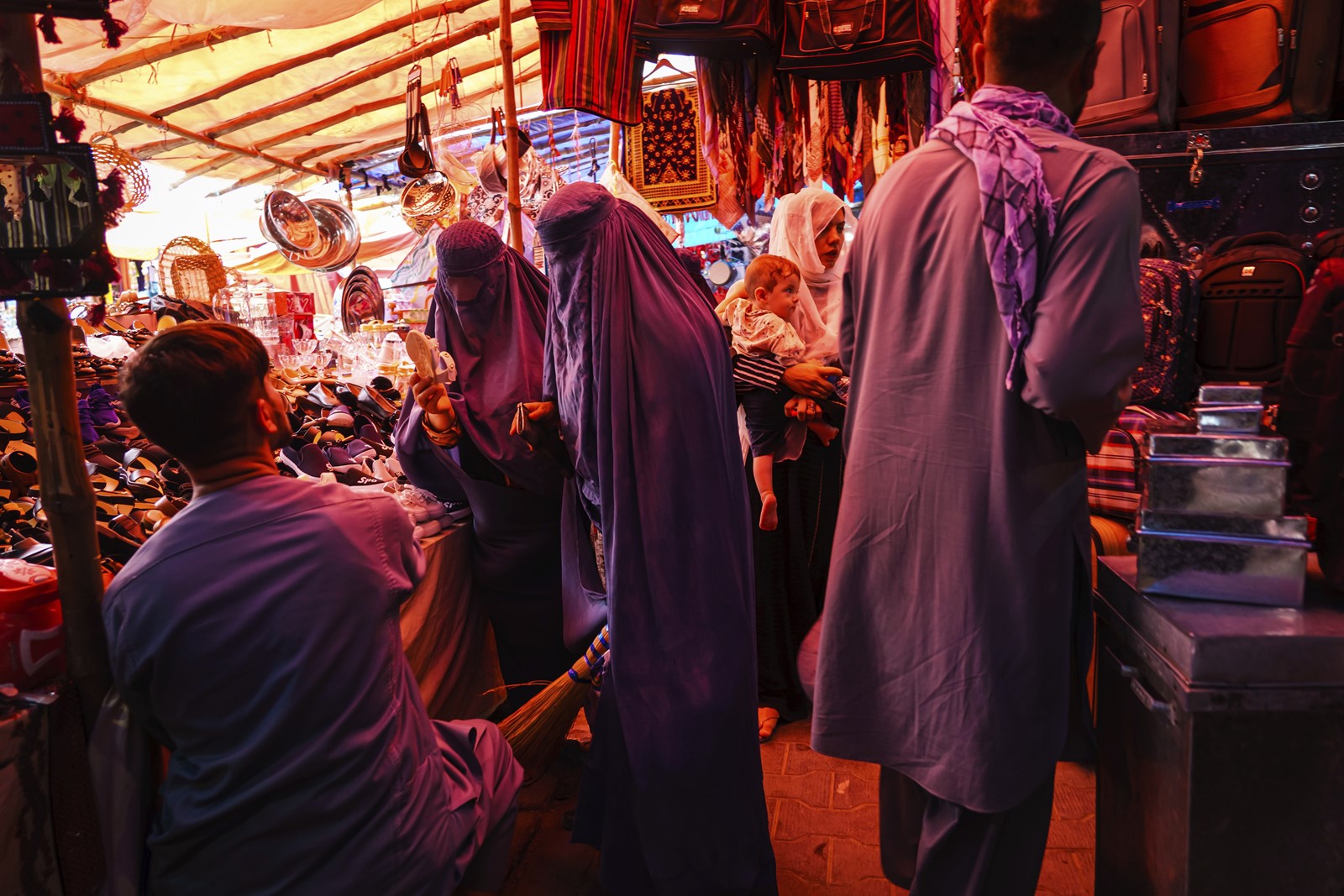
Venturing out now in greater numbers, after most remained home in the days just after the capital changed hands, women are generally adhering to a mode of dress common in Muslim countries: arms, legs and hair covered, nothing short or tightfitting. Burqas can be seen on Kabul’s streets but are not the norm.
One of the big unknowns is whether Taliban leaders accept the fact that the Afghanistan of today is a different country than the one they previously ruled. Over the last two decades, the capital became a far more cosmopolitan place, with shopping malls and cellphone stores and cappuccino bars where young men and women mixed freely.
Women’s advocates, largely supported by religious scholars, have always maintained that there is nothing in the Quran decreeing a covering as restrictive as the burqa. But in the Taliban’s earlier turn in power, the group’s extreme interpretation of Islamic teachings was used to justify actions that ranged from the brutal to the bizarre: public executions that shocked the world, as well as the belief that meteorology was a form of sorcery.
Even before the Taliban takeover, women in public, especially alone, would sometimes wear a burqa to avoid calling attention to themselves, and for protection against harassment. Sometimes they were ordered to do so — by a husband, a brother, an uncle, even a son.
Any change in sartorial standards could affect girls, who were denied education under previous Taliban rule, as well as women. At the all-girl Zarghuna High School, with more than 8,000 students, the uniform even before the Taliban takeover consisted of modest black tunics and trousers with a white head covering.
On Monday, Taliban spokesman Suhail Shaheen tweeted a photo of schoolgirls dressed the same way as before, captioned: “Back to school in the New Afghanistan.”
At Fahruddin’s store at the main bazaar in the Khair Khana neighborhood, the 27-year-old merchant and his brother Amir, 20, are charging more than double the old price for burqas: 1,500 afghanis, or about $17. But after those first few days, the sales boom trailed off.
The brothers said one possibility was that people are simply short of money, with salaries mostly frozen and banks not dispensing cash. Other merchants, though, said modest but not all-concealing garments such as the
Shopkeeper Naweed Ahman Naweed has never stocked burqas in his 11 years in business and doesn’t intend to start now. The
Although Afghan women may be frightened and dismayed at the prospect of Taliban rule, some men — including Fahruddin and his brother — said they saw certain benefits: more public order, less traffic.
Pickpocketing and other petty crimes in the bazaar were down sharply, Fahruddin said. In the old days of the Taliban, thieves risked having a hand chopped off.
Nearby, a group of women, burqas folded back to reveal their faces, greeted an approaching foreigner. But a teenage boy with them raised a warning hand to his older female relatives.
“No talking to other men,” he said sternly. “It is not allowed.”
The women could only sigh and look away.
