


Reprieve for the Colorado River
Feds say storms and conservation have eased immediate risk of depleting reservoirs, leaving ‘breathing room’ to develop long-term plans for adapting to climate change
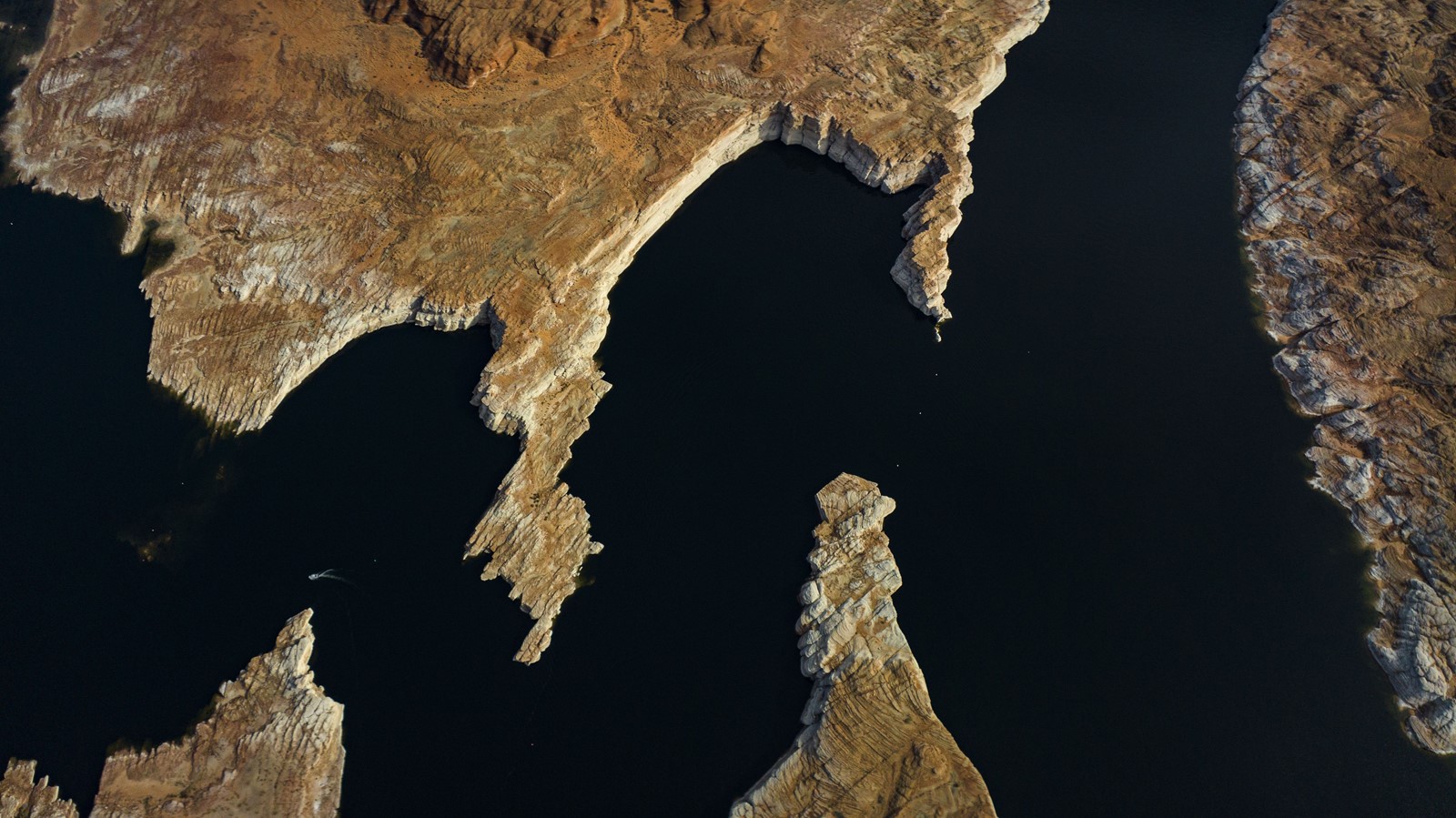
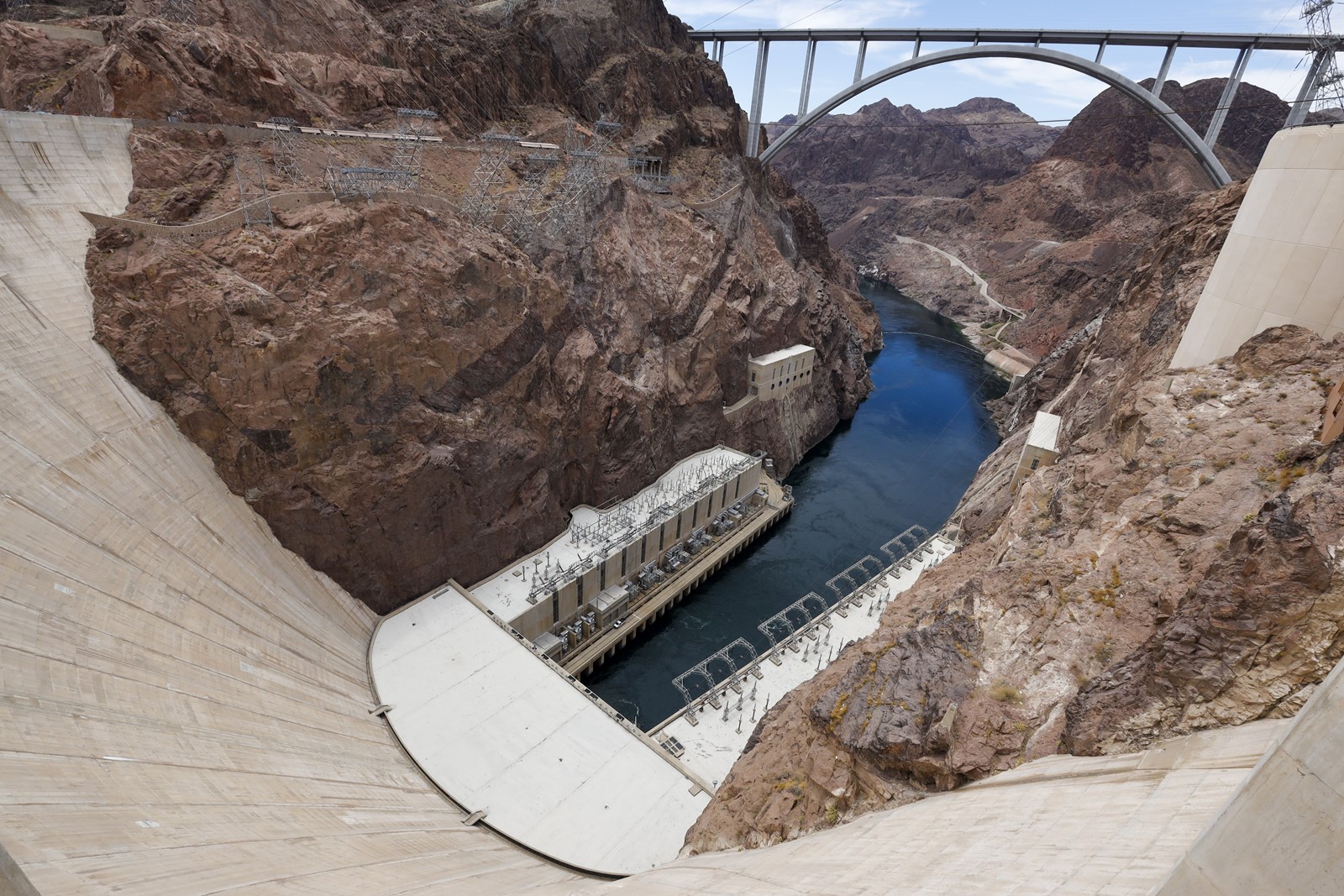


After a wet year and a push to conserve water in the Southwest, the risk of the Colorado River’s reservoirs declining to critically low levels has substantially eased, federal officials say.
The Biden administration’s water and climate officials said the rise in reservoir levels and ongoing conservation efforts will provide breathing room for the next couple of years, allowing the region’s water managers to come up with new long-term rules to address the river’s chronic over- allocation and the worsening effects of climate change.
“Even with the welcome rain and snow forecast across the West, the big picture remains the same. The past two decades have culminated in critically low reservoir conditions,” Camille Calimlim Touton, commissioner of the U.S. Bureau of Reclamation, said Tuesday.
“The prolonged drought crisis is driven by effects of climate change, including extreme heat and low precipitation,” Touton said. “The reality is that aridification will only intensify the drought-related impacts in the Colorado River Basin and the communities it supports. We know we must adapt to this new reality with innovative and durable solutions.”
She said the Biden administration, working with states, tribes and water agencies, has made progress in helping “protect the sustainability and stability of the Colorado River.”
The river’s flow has declined dramatically since 2000, and global warming driven by the burning of fossil fuels worsened the long stretch of extremely dry years through 2022, research shows. Last year, however, storms blanketed the Rocky Mountains with an above-average snowpack; this year, the region’s snowfall and rain have been about average.
The water level in Lake Mead — the country’s largest reservoir, located near Las Vegas — has risen nearly 29 feet over the last year and is at 37% of capacity. Upstream, on the Utah-Arizona border, Lake Powell, the second-largest reservoir, stands at 34%.
In 2023, California, Arizona and Nevada committed to reducing water use by 3 million acre-feet over three years, cutting usage by about 14% across the Southwest. Federal officials said those conservation efforts, supported largely by federal funds, are helping to boost reservoir levels.
The states proposed the short-term cuts to deal with water shortages through 2026, when the current rules for managing the river expire. The Bureau of Reclamation released its final analysis of the water reductions Tuesday, saying the measures have substantially reduced the chance of hitting critically low reservoir levels for two years.
Touton called it a significant milestone, saying the Biden administration has successfully “staved off the immediate possibility of the Colorado River system’s reservoirs … falling to critically low elevations that would threaten water delivery and power production.” She said the agreement on the short-term measures “has given us the breathing room to focus on the long term.”
The Bureau of Reclamation plans to complete a draft environmental review of long-term alternatives for post-2026 rules by the end of the year. Federal officials had asked representatives of seven states, tribes, water districts and others to present initial proposals by early March.
However, negotiations among the region’s water managers have led to disagreements and competing proposals. Participants in the talks said there are disputes between the states in the river’s lower basin — California, Arizona and Nevada — and those in the upper basin — Colorado, Wyoming, Utah and New Mexico.
The long-term rules, which will take effect in 2027, will be developed “collaboratively, transparently and inclusively,” with input from states, tribes and other stakeholders, said Laura Daniel-Davis, the Interior Department’s acting deputy secretary.
“We are committed to pursuing a collaborative, consensus-based approach,” Daniel-Davis said. “We are not expecting every single issue to be smoothed out between the upper and lower basin tomorrow. But the reality is that everyone is saying the same thing: We are all committed to a basinwide solution, and we’ll continue to work honestly and collaboratively through any major sticking points until consensus has been reached.”
She said federal officials will participate in discussions with stakeholders through the spring and summer “to achieve as much consensus as possible.”
As part of the talks, she said, the administration is ensuring that leaders of the 30 tribes in the Colorado River Basin “have a seat at the table.”
“Failure is not an option,” Daniel-Davis told reporters. “As we envision what the next several decades of Colorado River management look like, the Interior Department is taking every possible measure to ensure that this vital system does not collapse.”
Much of the reduction in water use until 2026 is happening through deals that involve payments of federal funds. Agricultural landowners, water districts, tribes and cities are receiving payments as they reduce use.
Federal officials said about three-fourths of the reductions will be compensated through funds available from the Bipartisan Infrastructure Law and the Inflation Reduction Act. They said federal investments under 24 agreements total $670 million; among the participants are the Imperial Irrigation District, the city of Phoenix and the Quechan Tribe.
Bureau of Reclamation officials said they are in talks on additional conservation agreements to achieve the planned reductions through 2026.
“The Biden-Harris administration has been working to bring every tool and every resource to bear as we seek to both minimize the impacts of drought and develop a long-term plan to facilitate conservation and economic growth,” said Michael Brain, the Interior Department’s principal deputy assistant secretary for water and science.
The latest round of deals, announced Tuesday, include commitments of nearly 400,000 acre-feet of conserved water, with contributions coming from California’s Palo Verde Irrigation District, Coachella Valley Water District and Bard Water District.
The cuts in water use will preserve supplies in Lake Mead, boosting its levels.
White House National Climate Advisor Ali Zaidi said the Biden administration has moved quickly “in the face of a slow-moving disaster.”
“For the 40 million Americans across seven states that rely on this resource, climate change is not a question,” Zaidi said. “The question is, how do we come together? … How do we, in the face of this incredible crisis, come out stronger?”
Water experts and observers have called for greater flexibility in the river’s management framework to adapt to extreme droughts and long-term drying driven by rising temperatures. Environmentalists have advocated for more aggressive steps to plan for dwindling river flows, urging the government to consider draining Lake Powell and decommissioning Glen Canyon Dam to restore a free-flowing river upstream from the Grand Canyon — an idea some influential California farmers have supported.
Responding to the federal government’s review of the short-term conservation plan, representatives of California, Arizona and Nevada said in a joint statement that it “provides the stability we need to fully focus on long-term solutions.”
They noted that the three states’ combined water use last year was the lowest since 1983, which they said reflects a “collective recognition that the river’s health is the responsibility of everyone who relies on it.”
California uses more Colorado River water than any other state. But in 2023, deliveries from the river to the state were the lowest since 1949, according to Adel Hagekhalil, general manager of the Metropolitan Water District of Southern California, which serves 19 million people.
He pointed out that a year ago, California was at odds with other states on conservation proposals, and there was talk that legal disputes might end up in court. But since then, he said, the three lower-basin states “made a choice to sit down at the table and build realistic solutions that could quickly produce results.”
“Cities and farms across the state are working hard to lower their Colorado River water use,” he noted. “These efforts have helped stabilize the Colorado River for now, but we must all do more.”
