


RUTGER HAUER, 1944 - 2019
A ‘genuine and magnetic’ actor
The Dutch star of ‘Blade Runner’ dies at 75. He was in ‘Batman Begins’ and ‘Sin City.’
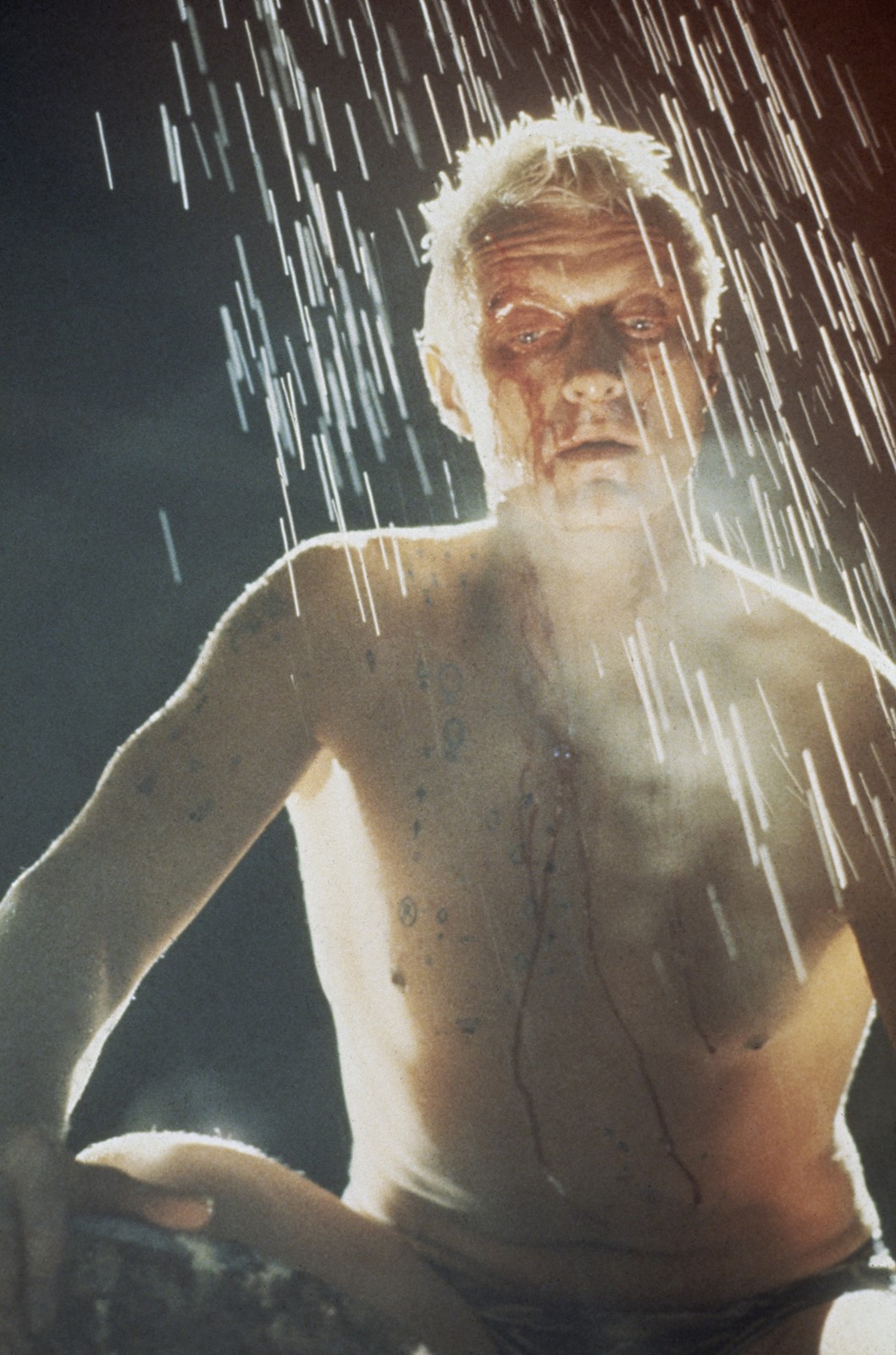


Hauer “passed away peacefully at his Dutch home” on July 19 after a short illness, according to a Wednesday announcement on his official website, which was attributed to the actor’s AIDS charity, the Rutger Hauer Starfish Assn. Hauer’s agent, Steve Kenis, also confirmed Hauer’s death to The Times.
“We at Starfish will always cherish the many unforgettable memories we have of Rutger and his dedication to the Rutger Hauer Starfish Assn.,” the announcement said.
“One of Rutger’s last wishes was that Starfish should continue its charity activity and its fight against the AIDS disease, and with [his wife] Ineke’s precious help, involvement and direction we will follow Rutger’s wish and will do our best to carry on Rutger’s inestimable legacy.”
Hauer’s website says he was born in 1944 to actors Arend and Teunke Hauer, and was on stage by age 5.
He would build a transatlantic following, kicking off his career in the Netherlands with several arthouse projects with Paul Verhoeven that led to his star-making role in the 1977 film “Soldier of Orange.”
His U.S. breakthrough came with Ridley Scott’s “Blade Runner,” in which he played violent Nexus-6 replicant Roy Batty, which set a trajectory for his career.
“I find that people are fascinated by evilness,” Hauer told The Times in 1993. “Some people are sort of paralyzed by it but, as an actor, I’m not. Part of the freedom that you have as a bad guy is that you can go anywhere, try anything, especially if he’s a psychotic bad guy.”
Eventually, Hauer aimed to shed the menacing typecasting that dogged his early career by enlisting a dialogue coach to diminish his Dutch accent. He ultimately adopted a flat Midwestern accent when he moved to the U.S. in 1980.
“Because this is where I want to work, and to have a career here, I must be able to play Americans,” he told The Times in 1985. “Every actor is limited by his looks and his ability, so why be limited by an accent too?”
Up to that point, he’d portrayed foreigners in his 1980s films — a terrorist in “Nighthawks” with Syl-vester Stallone, a French count in “Eureka” with Gene Hackman, a German in “Inside the Third Reich,” and a Frenchman in the medieval fantasy “Ladyhawke.”
Hauer, who more recently played a fairy patriarch in HBO’s “True Blood” and took a musical turn in the ABC comedy “Galavant,” also earned a Golden Globe as a supporting actor in the 1988 war drama “Escape From Sobibor,” a TV movie that also starred Alan Arkin and Joanna Pacula.
Director Guillermo del Toro was among Hollywood admirers who paid their respects online Wednesday. “RIP the great Rutger Hauer: an intense, deep, genuine and magnetic actor that brought truth, power and beauty to his films,” the filmmaker wrote on Twitter.
Hauer is survived by his wife, Ineke, who had been with him for 50 years, and his daughter, actress Aysha Hauer.
