


Family wants to know why detainee died
José Ibarra Bucio went into a coma after a brain hemorrhage at Adelanto ICE facility.
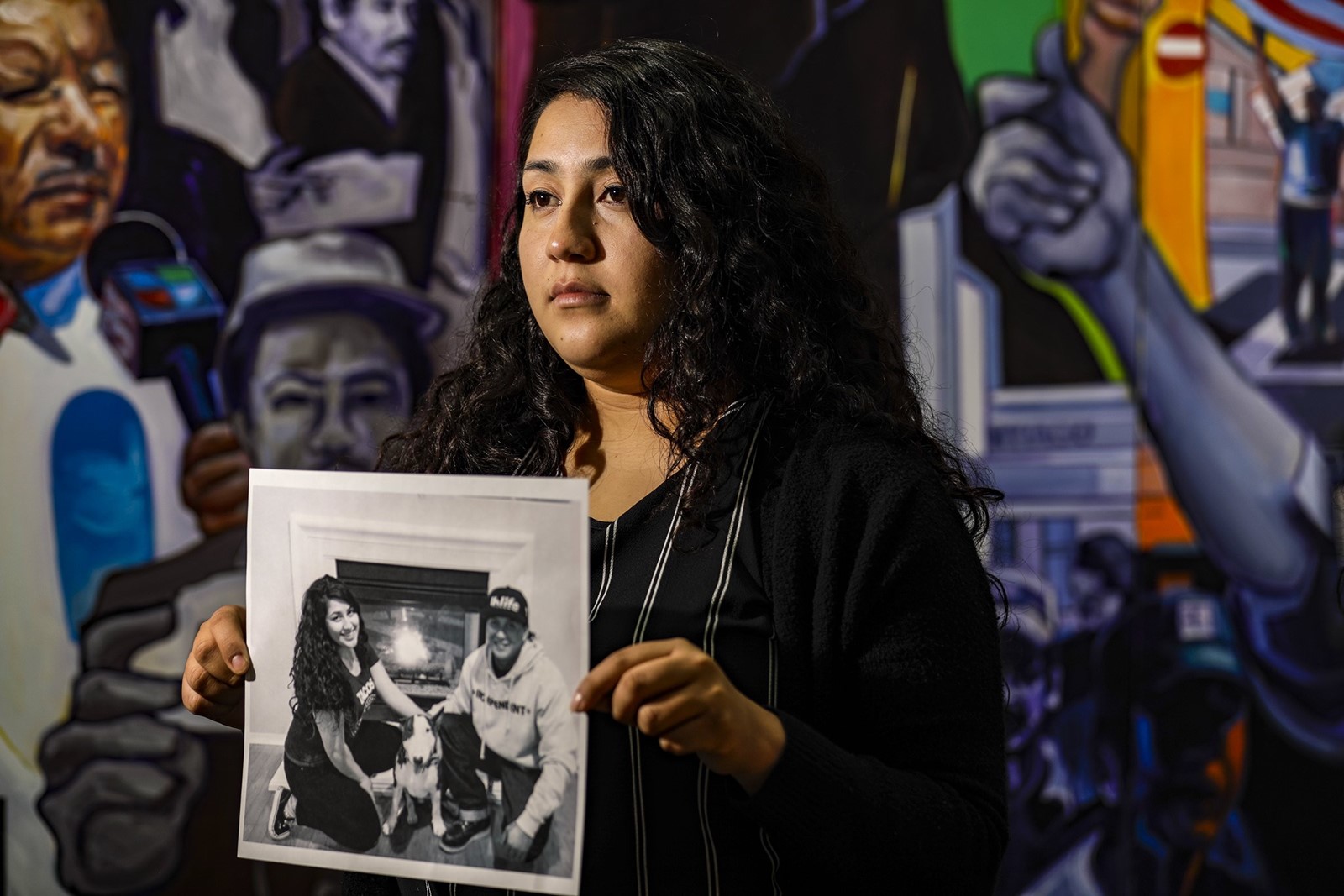


José Ibarra Bucio, 27, had been detained at the Adelanto ICE Processing Center for about a week when he called his wife in early February, saying he was desperate to get out.
Their baby had been born three days earlier, and Ibarra was terrified of being deported to Mexico, which he left when he was 4 years old, without getting to know him.
“He was very impatient, very frustrated, very persistent that we needed to get him out,” said Melissa Castro, Ibarra’s wife.
The next day, Ibarra collapsed and was taken to the hospital. He fell into a coma and died six weeks later.
Ibarra’s family says they are desperate to know exactly what happened to the onetime delivery driver while he was in Immigration and Customs Enforcement custody.
They are asking for an investigation into whether Ibarra received timely medical care, and why ICE officials waited a day to tell them that he was in the hospital. They also want to know why officials had him handcuffed to a bed while in a coma, with guards around him at all hours.
“All I want to know is what happened to him,” said Castro, 27. “My son will never be able to experience the love and happiness my husband brought to my life as I know he would have brought to his.”
Castro and Ibarra’s sister, Lucian Ibarra, 29, spoke to The Times before a news conference Wednesday at the offices of the Coalition for Humane Immigrant Rights of Los Angeles.
ICE spokeswoman Lori Haley said Ibarra was taken into custody after he was released from prison. He’d been convicted last year of a felony for fleeing a peace officer while driving recklessly, she said.
Prior to the arrest, Ibarra had been given temporary protection from deportation under Deferred Action for Childhood Arrivals, or DACA, Castro said.
A spokeswoman for the San Bernardino County Sheriff’s Department said firefighters and paramedics responded to the detention center at 3:03 p.m. Feb. 7 after a 911 call reporting that a detainee had fallen. It was unclear whether the call was for Ibarra.
Doctors at Loma Linda University Medical Center told the family that Ibarra had passed out and suffered a brain hemorrhage, Castro said.
On Feb. 22, about two weeks after he was taken to the hospital, Ibarra was released from ICE custody “on an order of recognizance with respect to humanitarian concerns,” Haley said.
Castro said ICE officials left a form in Ibarra’s room that day, informing the family of the decision to release him. While grateful that Ibarra would no longer be guarded and shackled, family members also realized they would be responsible for his medical bills.
Ibarra’s family decided to take him off life support on March 20, and he died the following day at Loma Linda, the family said.
The case comes as the Adelanto facility has been under intense scrutiny for issues related to medical care and treatment of detainees. The center can house nearly 2,000 men and women as they await the outcome of their immigration cases.
Last year, the Department of Homeland Security inspector general’s office issued a scathing report in which officials said they had found several problems at the facility that posed “significant health and safety risks,” including detainees who reported waiting “weeks and months” to see a doctor.
In 2017, immigrant advocates raised alarms about conditions at the facility after the deaths of three detainees in three months.
That August, The Times reported that there had been at least five attempted suicides at the facility in less than one year.
Last month, the city of Adelanto announced it would end its contract related to the ICE Processing Center. The city had acted as a go-between for ICE and the GEO Group, the private prison company that runs the center.
ICE’s decision to release Ibarra from custody also raises questions about what oversight will be conducted into the death.
When a detainee dies, ICE issues a news release within two business days with “all relevant details,” according to guidelines on its website. But Ibarra was no longer in custody when he died, and there is no news release on the agency’s site. Instead, the case came to light when the family went public.
The San Bernardino County coroner’s office often investigates the deaths of inmates and detainees. But Jonathan Kroeker, supervising deputy coroner investigator, said the office was not involved in investigating Ibarra’s death.
“The circumstances surrounding his death did not require” an investigation, Kroeker said. “Whether he was in custody or not in custody was one element we would evaluate, but he was not in custody.”
Kroeker added that there were many elements that would have contributed to the decision.
Haley, the ICE spokeswoman, did not immediately respond to questions about whether officials would conduct a death review, as they do when detainees die in custody, or any other investigations into Ibarra’s death.
Lucian Ibarra, his sister, says she wants more information in order to understand what happened.
“I would like a proper investigation because we as a family were very concerned of the things that led my brother to be hospitalized,” she said.
“My brother was such a healthy man. All this took us by surprise, and we still don’t have answers to this day.”
As she spoke, her brother’s 2-month-old son, Damian, slept in a stroller nearby.
