


Wuhan lab leak? Still no evidence


A corollary to the scientific truism that “nature abhors a vacuum” is that nature tends to fill the void with any garbage near at hand.
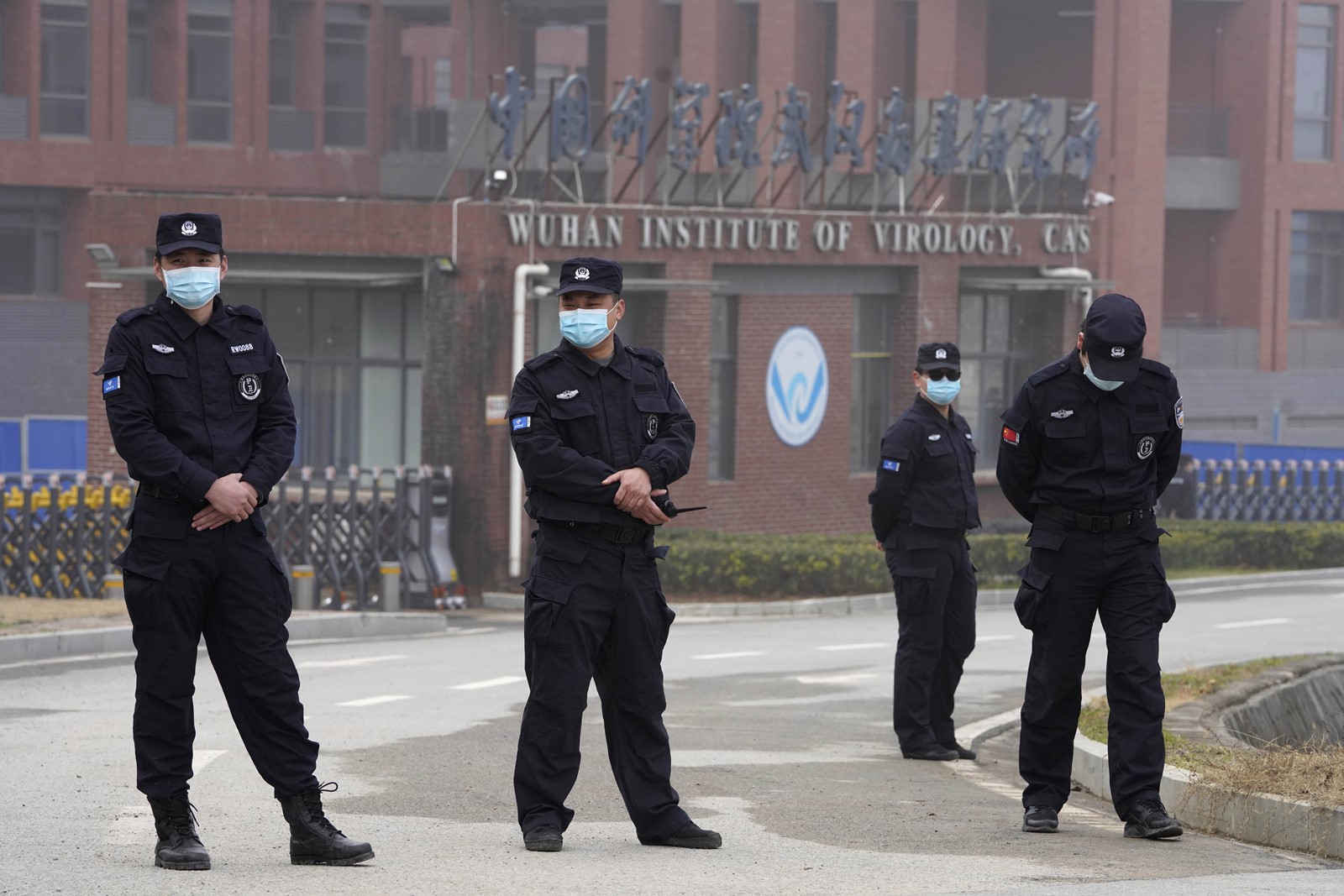
For example, consider the surge of interest in the claim that the coronavirus reached the outside world through a release — accidental or deliberate — from a virus laboratory in Wuhan, China.
The “lab-leak hypothesis,” as it’s known to virologists, is experiencing a heyday. Long dismissed by many experts, it’s now being taken more seriously as one of two general possibilities for COVID-19’s origin, along with the theory that the virus reached humans through contact with animal hosts.
In a May 14 letter in the magazine Science, 18 eminent experts urged that “a transparent, objective, data-driven” investigation be undertaken of both theories to achieve “greater clarity about the origins of this pandemic.” Their letter was directed to the World Health Organization, which in April labeled the laboratory origin of COVID-19 “extremely unlikely.”
Further, President Biden on May 26 gave federal intelligence agencies 90 days to provide him with “the most up-to-date analysis of the origins of COVID-19, including whether it emerged from human contact with an infected animal or from a laboratory accident.”
The new speculation about the origins of COVID-19 has caused some stock-taking by the press, which is accused of ridiculing the lab-leak theory in all its manifestations during 2020 merely because it was promoted by President Trump.
What’s missing from all this reexamination is a fundamental fact: There is no evidence — not a smidgen — for the claim that COVID-19 originated in a laboratory in China or anywhere else, or that the China lab ever had the virus in its inventory.
No one disputes that a lab leak is possible. But “zoonotic” transfers — that is, from animals to humans — are a much more common and well-documented pathway.
That’s why the virological community believes that it’s vastly more likely that COVID-19 spilled over from an animal host to humans.
That was the conclusion reached in a seminal paper on COVID-19’s origins published in Nature in February 2020 by American, British and Australian virologists.
“We cannot prove that SARS-CoV-2 [the COVID-19 virus] has a natural origin and we cannot prove that its emergence was not the result of a lab leak,” the lead author of the Nature paper, Kristian Andersen of the Scripps Research Institute in La Jolla, told me by email.
However, “Precedence, data, and other evidence strongly favor natural emergence as a highly likely scientific theory for the emergence of SARS-CoV-2, while the lab leak remains a speculative incomplete hypothesis with no credible evidence,” Andersen said.
Coauthor Robert F. Garry of Tulane Medical School told several colleagues during a recent webcast: “Our conclusion that it didn’t leak from the lab is even stronger today than it was when we wrote the paper.”
What remains of the lab-leak theory are half-truths, misrepresentations and tendentious conjecture.
Consider one trigger of heightened speculation, a May 23 article in the Wall Street Journal reporting that three researchers at the Wuhan Institute of Virology, which is located in the community where the first major outbreak was identified, became sick enough in the fall of 2019 to seek hospital treatment.
There’s no evidence that the three researchers had contracted COVID-19 as opposed to flu or any other virus.
As for the letter in Science, some of its 18 signatories have taken pains to emphasize that they are not endorsing the lab-leak theory; some are highly skeptical of the hypothesis.
The organizer of the letter, David Relman of Stanford, told Nature’s Amy Maxmen, “I am not saying I believe the virus came from a laboratory.” Another signatory, Ralph S. Baric of the University of North Carolina, told the New Yorker, “The genetic sequence for SARS-CoV-2 really points to a natural-origin event from wildlife.”
Their goal in signing the letter, they said, was to urge the WHO to devote more effort to determining the origin, whatever it might be.
Let’s take a look at the science underlying the search for COVID’s origins.
“There is an extensive history of pathogen emergence by natural means: most novel viral pathogens that have caused epidemics or pandemics in the human population have emerged naturally from a wildlife reservoir,” Angela Rasmussen of the Center for Global Health Science and Security at Georgetown University wrote in January.
“The overwhelming conclusion is that this virus, too, found its way into a human host through a series of unhappy accidental encounters with animals,” Rasmussen observed.
For a laboratory leak to have occurred secretly or inadvertently would require “a massive conspiracy and cover-up involving a lot of people ... not telling the truth about what they were working on,” Garry told me.
The assertion that the press was too quick to disdain the lab-leak theory because it was touted by ideologically suspect sources — Trump and Sens. Tom Cotton and Rand Paul, among others — overlooks a few pertinent factors.
One is that these individuals were known promoters of falsehoods. It would have been unwise and imprudent to suddenly treat them as truth tellers, especially since their lies had often been targeted at China, for political reasons. The idea that China had concealed its lab’s role in the pandemic dovetailed well with policies aimed at painting China as an untrustworthy economic and political actor.
Another reason for journalistic skepticism was that many professional virologists labeled the lab-leak theory as implausible from the first. This was because the theory presupposed a complex series of events coming together just so — secrecy, coordination, even deliberate malevolence, abetted by extreme sloppiness.
Advocates of the lab-leak theory point to the location of the Wuhan Institute of Virology, in the same community as the first known outbreak. But they overlook the magnitude of China’s trade in wildlife for food and traditional medicine, among other uses — including in and around Wuhan.
Determining the origins of COVID-19 may not be important to address the current pandemic, which can be done only through public health stratagems. But it’s important for policies to deal with the next pandemics, since policies will be different for outbreaks that start with animal-human contacts and those originating in poor laboratory security.
There’s an argument for getting more accountability out of China about its handling of the viral outbreak in its earliest stages. But there’s also an argument against pointing fingers at the Chinese regime or its scientific establishment without evidence: China’s cooperation will be crucial for world health in the future, and it’s less likely to happen if the country feels it has been unjustly blamed for COVID-19.
“The lab-leak hypothesis is taking the oxygen out of what’s really needing to be done, which is cooperating with China,” Garry told his colleagues on the recent webcast.
“Follow the animals,” he said. “That’s where we’re going to find the origin of COVID-19.”
