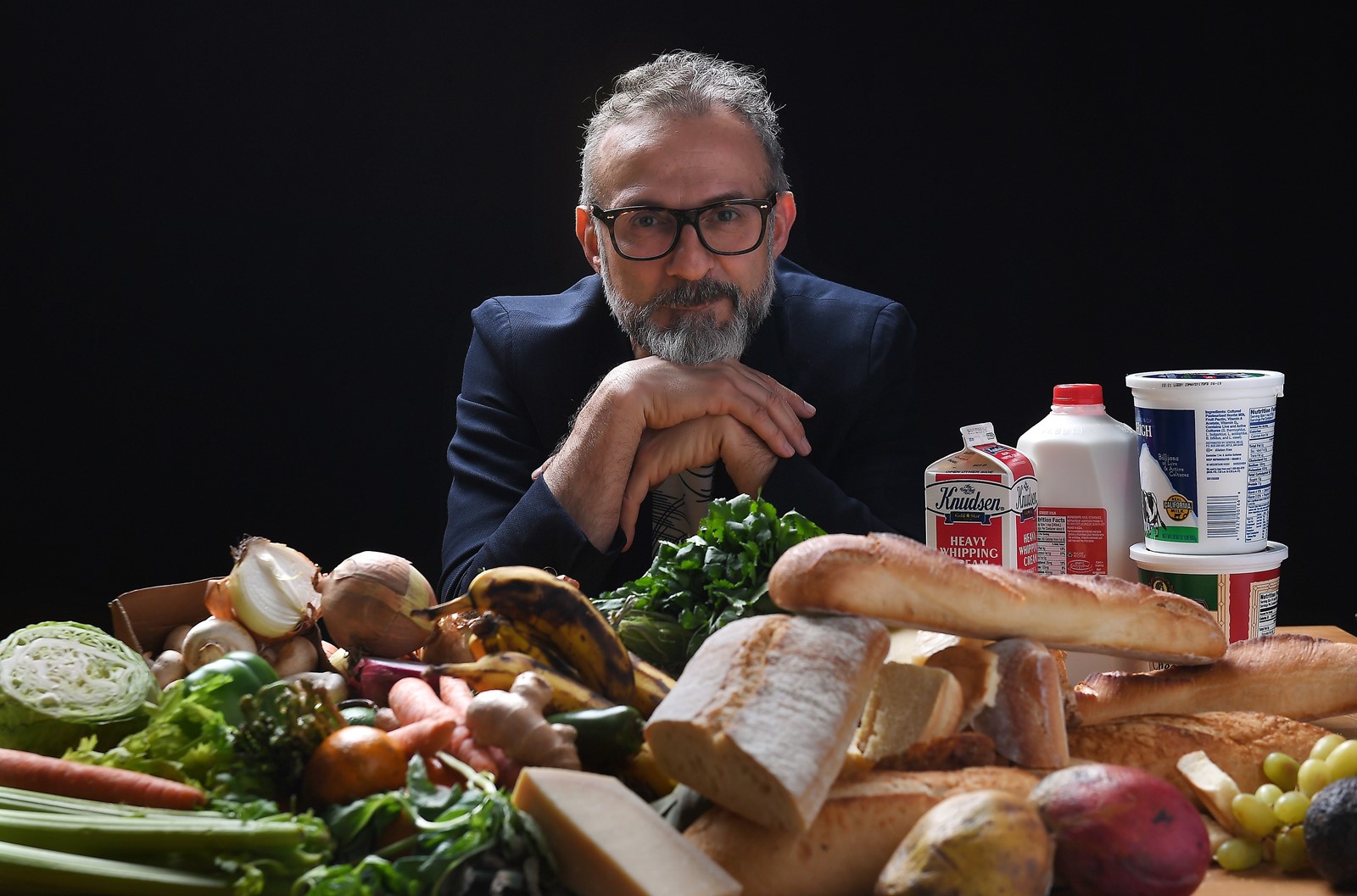
Bottura is in Los Angeles participating in various events related to the L.A. Times Food Bowl, including the first Los Angeles Feeding the 5000 on Thursday that culminated in a free feast made entirely from fresh produce and meant to highlight the global issue of food waste.
Bottura discussed food waste and the mission of Food for Soul in an email interview, and then visited The Times’ Test Kitchen and studio to discuss food waste, and to give tips for using leftover food items. What’s it like to have one of the best chefs in the world clean out your refrigerator? We found out.
What is a refettorio, and why do you use this name to describe the soup kitchens you’ve created?
The word refettorio (translation: refectory) has roots in the Latin word “refuse,” which means to remake, but also to restore. The dual purpose of the refettorio is to fill the empty belly and to feed the hungry soul. On one hand, a refettorio is a kind of charity kitchen, like a soup kitchen, that embraces not only the need to offer food but also hospitality to those in need.
What differentiates a refettorio from a soup kitchen is our way of serving a meal. Guests are invited to sit at communal tables, and they are served a full meal by volunteers. The idea behind this kind of hospitality comes directly out of my personal experience running restaurants for the past 30 years. And I wholeheartedly believe that there is more value in a meal shared at the table together than a meal eaten alone. The social part of the experience is a kind of therapy that is good for everyone — guests, volunteers and chefs. It creates a kind of convivial atmosphere that helps rebuild dignity, all around the act of eating a meal.
Where do your kitchens get their food? And what are some of the most common foods you see discarded or wasted?
The refettori are getting their food from surplus, reclaimed and salvaged food that otherwise would have been wasted from supermarkets, fruit and vegetable markets and donations from distributors, artisans, producers.
But we also receive a lot of expensive foodstuffs, like tropical fruit. In Refettorio Ambrosiano, it happened a couple of times to receive caviar!
This is a clear indicator of what the real problem is. It is not about ugly and discarded fruit. It’s about overwhelming surplus and incoherent distribution.
What are some important things you’ve learned since you’ve started the refettori? Was there anything that surprised you?
In a way, I stumbled upon the issue and have since been trying to catch up.
I think what surprised me the most at the Milan refettorio was the amount of packaged meat that is being taken off the shelves of supermarkets. I can only hope that the meat is being given to food banks or distributed to charity kitchens, because from my experience, we were able to feed over 100 people a day from the excess of just one supermarket.
If we can make a small dent in the food chain and stop that kind of wastage by feeding people who are most in need, then we have found a simple solve to a complex problem.
You invite chefs to work with these kitchens to teach the communities and local volunteers how to sustain each kitchen long-term. Why is this so important?
There are two reasons that we invite chefs to launch our refettorio projects: One, chefs with experience, creativity and knowledge are the best people to set up a kitchen and show others how to run it properly. One of the first things that Ferran Adrià [the Spanish chef who ran the famed El Bulli restaurant] asked when he entered the kitchen was, “What’s in the refrigerator?” He was asking about the leftovers from other chefs’ preparations — broths, ragouts, ice creams and sauces — that were in excess. He would begin from there to create his dishes. That is what this kind of cooking is really all about — putting aside your ego and making due with what you have available.
The second argument for inviting chefs to cook in these kitchens is about making visible the invisible. The know-how of a chef with more than 10 or 20 years’ experience in the kitchen is essential to shed light on the real value of food. He or she is able to show how to grab the best out of each foodstuff, at every stage of its lifespan. Chefs can also teach how to use parts of ingredients that are usually considered inedible. One of the most iconic dishes I made at Refettorio Gastromotiva is carbonara pasta made with smoked banana peels instead of bacon.
These kitchens really foster a sense of community and help to prevent isolation. Why is isolation such an issue when it comes to health — for both the individual and community?
Isolation and loneliness is a problem in cities, especially for the disenfranchised, immigrants and elderly community. By creating a beautiful, safe and inviting space in an at-risk neighborhood, you are inviting the community to bind their communal identity, either by volunteering in the kitchen, the dining room or even just using the space for their own social activities.
One of the most touching things that happened in Milan is that the elderly community began coming to lunch when we were hosting schoolchildren. Soon after, they asked if they could take over one of the lunch services and cook for their friends and the community. In this way, they are proud of the refettorio as something they are part of, keep it running and alive, and fight off their own loneliness.
As a chef, what are some simple tips you have for home cooks for rethinking vegetables and other ingredients they might normally discard?
Vegetable trimmings: pea shells, asparagus legs, celery bottoms, etc., can and should be saved and used to make vegetable broths.
Aged cheese rinds can be added to enrich the flavor.
Bread crumbs made from day-old bread are a common ingredient in many Italian recipes — from savory to sweet. Bread crumbs can be flavored in a skillet or baked with olive oil and herbs.
Recycling this often neglected and too often wasted resource is a question of being creative in the kitchen.
noelle.carter@latimes.com
Instagram: @carternoelle
Twitter: @noellecarter