


Ukraine evacuates liberated areas that may lack water, heat for winter
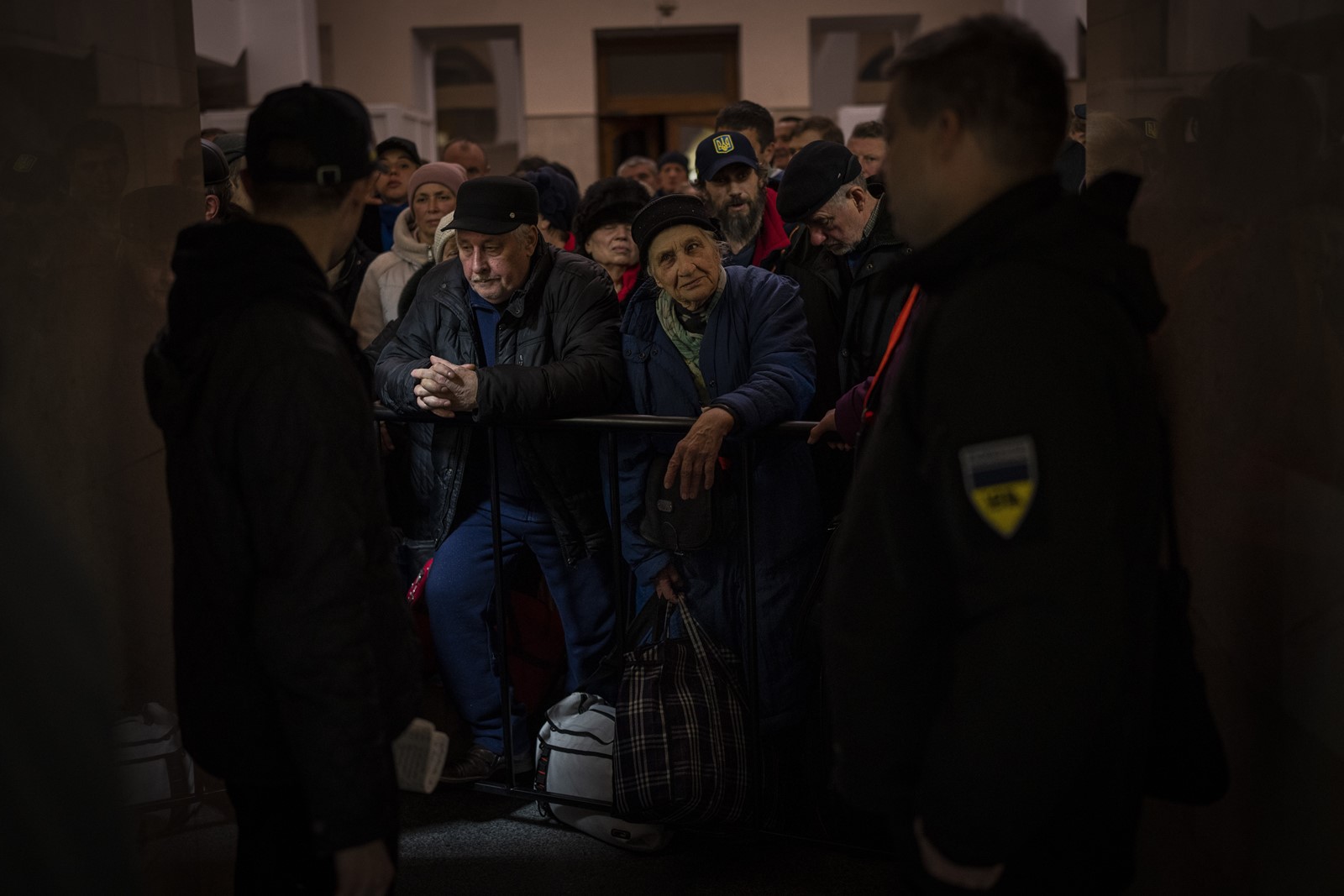


Authorities urged residents of the two southern regions, which Russian forces have been shelling for months, to move to safer areas in the central and western parts of the country. Ukrainian Deputy Prime Minister Iryna Vereshchuk said Monday that the government will provide transportation, accommodations and medical care for the residents, with priority for women with children, the sick and the elderly.
Vereshchuk last month asked citizens living abroad not to return to Ukraine for the winter in order to conserve power. Other officials have suggested that residents of Kyiv or elsewhere who have the resources to leave Ukraine for a few months should do so, to save power for hospitals and other key facilities.
The WHO delivered a chilling warning Monday about the impact of the energy crisis.
“This winter will be life-threatening for millions of people in Ukraine,” said the organization’s regional director for Europe, Dr. Hans Henri P. Kluge. “Attacks on health and energy infrastructure mean hundreds of hospitals and healthcare facilities are no longer fully operational, lacking fuel, water and electricity.”
He warned of health risks such as respiratory and cardiovascular problems as people try to warm themselves by burning charcoal or wood and using diesel generators and electric heaters.
The evacuations are taking place more than a week after Ukraine recaptured the city of Kherson, on the western bank of the Dnieper River, and areas around it, in a major battlefield gain. Since then, residents and authorities are realizing how much power and other infrastructure the Russians damaged or destroyed before retreating.
Ukraine is known for its brutal winters, and snow has already covered Kyiv, the capital, and other cities.
Russian forces are fortifying their defense lines along the Dnieper’s eastern bank, fearing that Ukrainian forces will push deeper into the region.
In the weeks before Ukraine’s successful counteroffensive, Moscow-backed authorities relocated tens of thousands of Kherson city residents to Russian-held areas.
Russian-installed authorities in the Kherson region on Monday urged people to evacuate an area on the eastern bank of the Dnieper that Moscow now controls. Officials cited heavy fighting.
Russia has been pounding Ukraine’s power grid and other infrastructure from the air for weeks, causing widespread blackouts and leaving millions of Ukrainians without heat, electricity or water.
To cope, power outages of four hours or longer were scheduled Monday in 15 of Ukraine’s 27 regions, according to Volodymyr Kudrytskyi, head of the state grid operator Ukrenergo, which plans additional outages on Tuesday.
Ukrainian President Volodymyr Zelensky says Russian missile strikes have damaged more than 50% of the country’s energy facilities.
Zelensky on Monday repeated his calls for North Atlantic Treaty Organization nations and allies to recognize Russia as a terrorist state, saying the country’s shelling of energy supplies was tantamount “to the use of a weapon of mass destruction.” Zelensky also again urged stricter sanctions on Russia and appealed for more air-defense aid for Ukraine.
“The terrorist state needs to see that they do not stand a chance,” he told NATO’s 68th Parliamentary Assembly meeting in Madrid in a video address, after which, he said, the assembly approved the terrorist designation.
On Sunday, powerful explosions from shelling shook Ukraine’s Zaporizhzhia region, the site of Europe’s largest nuclear power plant. The United Nations’ nuclear watchdog called for “urgent measures to help prevent a nuclear accident” in the Russia-occupied facility.
Kyiv and Moscow blamed each other for the shelling, which came after weeks of relative calm in an area that has been the site of fighting since Russia invaded Feb. 24. The specter of a nuclear catastrophe has loomed since Russian troops began their occupation of the plant during the early days of the war.
Also Monday, Zelensky and his wife made a rare joint public appearance to observe a moment of silence and place candles at a Kyiv memorial for those killed in Ukraine’s pro-European Union mass protests in 2014. As bells rang in a memorial tribute, Ukraine’s first couple walked under a gray sky on streets dusted with snow and ice up to a wall of stone plaques bearing the names of fallen protesters.
Meanwhile, at least four civilians were killed and eight more wounded in Ukraine over the past 24 hours, the deputy head of the country’s presidential office, Kyrylo Tymoshenko, said Monday.
Russian-installed authorities said Ukrainian shelling damaged power lines. One person was killed, officials said, and 59 miners were trapped underground after power was cut off to four coal mines.
