


The private life of a public treasure
A new biography of Dolly Parton features a deeper look at star’s rise from poverty.
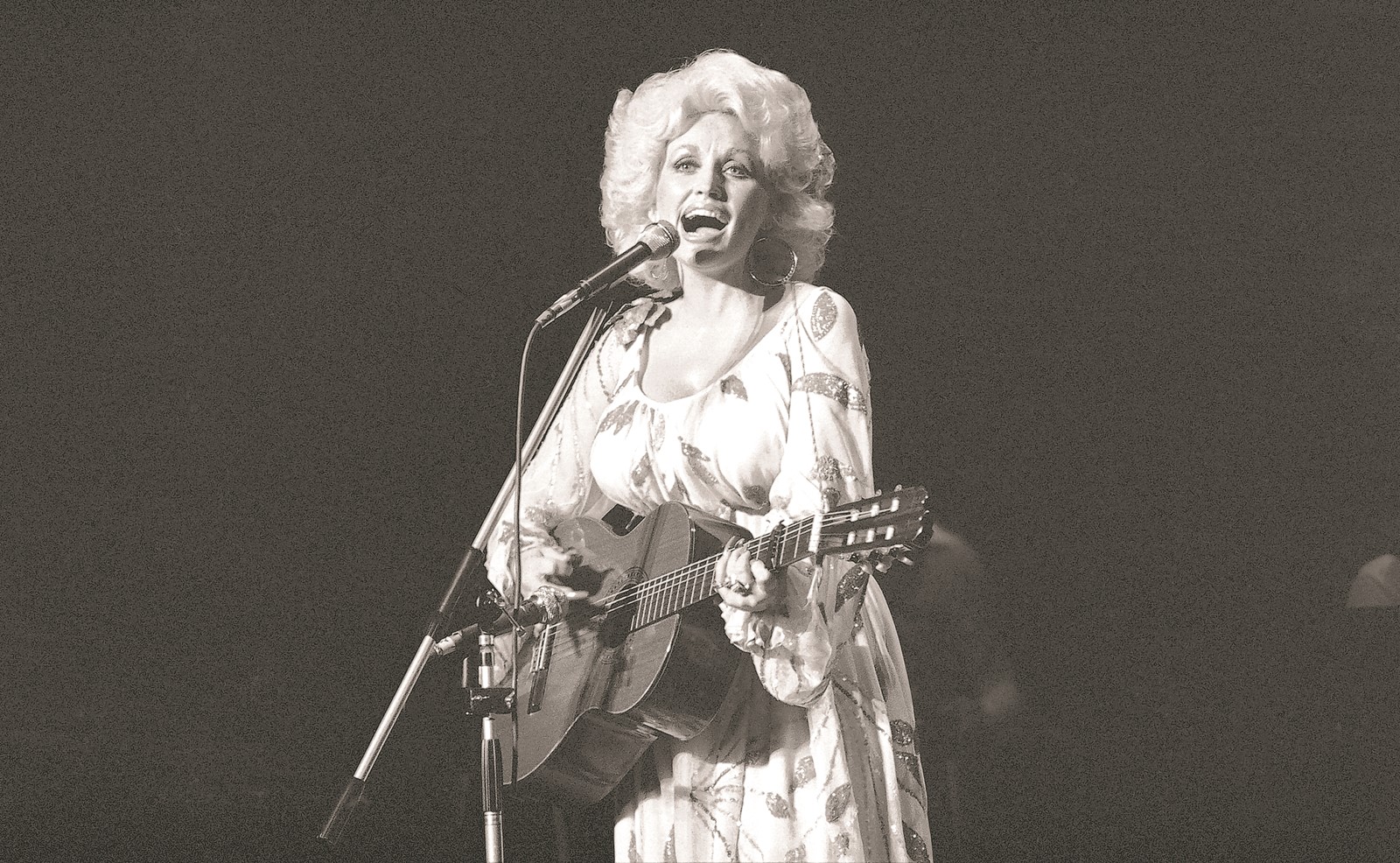


After reading through hundreds of interviews with Dolly Parton, biographer Martha Ackmann came to one realization: Parton courts reporters more than they court her.
“I read so many accounts when she was meeting with the press for movies and music,” says the author of the new lively biography “Ain’t Nobody’s Fool: The Life and Times of Dolly Parton,” over a Zoom call. “She has reporters in the palm of her hand. She gives the information that she wants you to have.”
Known for quotable one-liners and clever quips, Parton has long leveraged witticisms to endear herself to many — including the media.
Ahead of celebrating her 80th birthday this month, Parton told People: “If you allow yourself to get old, you will. I say, ‘I ain’t got time to get old!’ ”
Parton marked the occasion by reissuing a new charity recording of her classic song “Light of a Clear Blue Morning,” which features singers Lainey Wilson, Miley Cyrus, Queen Latifah and Reba McEntire. The state of Tennessee, meanwhile, declared Jan. 19 “Dolly Parton Day.”
It’s worth noting that part of Parton’s celebrity is her resistance to completely sharing all parts of her personal life, despite her deeply personal songs.
This was the tenor of her deeply private relationship to long-term husband Carl Dean, who completely avoided the spotlight and died last year at 82. And then there was a mysterious health scare last year, in which Parton had to announce publicly, “I ain’t dead yet!”
In Ackmann’s buoyant biography we get access to a deeper side of the star, and some new revelations: including how in high school Parton insisted on having her waist cinched so tight “it couldn’t grow,” plus how she maintains a taste for microwaved Häagen-Dazs (with the melted ice cream eaten with potato chips).
Talking with Parton’s close family, friends and neighbors helped shapeAckmann’s narrative. (Parton originally considered an interview but later went to ground.)
The book, which is equal parts entertaining and incisive, charts how the “I Will Always Love You” singer was born in a family of 12 children at the foothills of the Great Smoky Mountains. Her impoverished upbringing is what Ackmann uses to anchor Parton’s story. “I gave it that much time and place because that’s the wellspring of her imagination,” she says.
Storytellers and music have always been part of Parton’s family history. Take, for example, Parton’s great-grandmother, Tennessee, who kept her home open for “singing, fiddling, and buck dancing.” But poverty also ran in the bloodline, Ackmann explains, with Parton growing up “dirt poor” in a log cabin without running water or electricity. This wooden room was papered with newspaper clippings to keep the heat in. Potato sacks were restitched as dresses for the girls while ugly brogans that didn’t fit had to suffice as shoes.
Parton’s talent for music was seen from an early age: As a preschooler she often tapped rhythms on her porch while her mother snapped beans. Her Pentecostal faith would guide Parton in her desire to become a singer; a moment connecting with the Lord in an abandoned chapel galvanized her musical aspirations and future. It was all part of “God’s plan,” Parton herself says.
High school itself ushered in a “contemplative side,” Ackmann writes, with solitary sessions in cemeteries and by bridges provoking imaginative stories that would later inspire songs (like “The Bridge”).
Parton then headed straight to Nashville at 18 and soon scored her first record deal. But singing pop music was never a comfortable pairing, so Parton returned to country music, later landing her big break on “The Porter Wagoner Show.” Her songwriting would continue behind the scenes, even if she struggled with keeping a pencil and paper around. It would take decades for Parton to keep writing tools nearby. (Ackmann reports that the singer now carries a Ziploc bag with her.)
Parton’s lifetime love of wigs — and building a repertoire of different styles — started when her first record label took her out to the West Coast. “Her promotions man happened to be dating an actress who had a big part in the television series ‘Mr. Ed,’ ” Ackmann says. “This actress took her around, showed her L.A. and they went to the Max Factor store and tried on wigs.”
Her musical zenith came thanks to hit songs “Jolene,” “Here You Come Again” and “9 to 5,” the title track from the 1980 film where Parton also made her screen debut. Then other career coups like opening her namesake theme park Dollywood in Tennessee. Staring at the Hollywood sign during her early forays in L.A. provided the inspiration for the park’s branding. “She’s just playful with words all the time,” Ackmann says with a laugh.
The book also reports on some darker moments in the singer’s life: A nervous breakdown in 1982 fueled by health issues and a career slump, the nadir resulting in bouts of alcoholism and brief thoughts of suicide. Parton’s commitment to “God’s plan,” however, helped push her out of her crisis and to greater heights — and greater giving.
Her Imagination Library, which started in 1995 mailing books free of charge to children, remains a cornerstone of her philanthropy. In 2024, it reached a milestone of mailing 264 million books to kids.
After all Ackmann’s research and many interviews, what one quality defined the entertainer? “There’s her energy, her hard work, her dedication,” she says. “But I think the quality that I come away with most profoundly is decency.”
