


Several states are reporting cases of
intestinal illness cyclosporiasis
Disease caused by a microscopic parasite
can cause long bout of debilitating diarrhea.
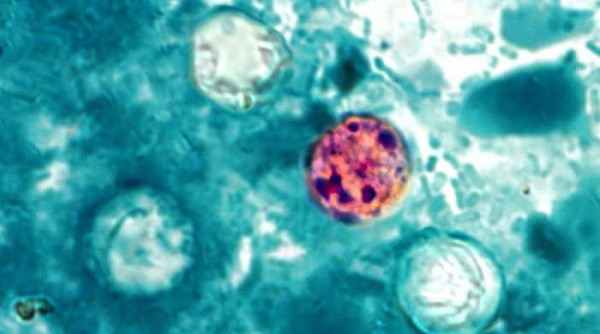


Several states, primarily in the Midwest and on the East Coast, have reported thousands of cases of cyclosporiasis, a parasitic disease that can cause an extended bout of debilitating diarrhea.
There have been cases of cyclosporiasis infection in California this year, but none has been linked to the current outbreak. Public health officials, however, have advice for residents to stave off illness.
Cyclosporiasis is an intestinal illness caused by several species of the microscopic parasite
People become infected with the illness by consuming food or water that has been contaminated with the parasite — the infection is not transmitted from person to person.
The epicenter of the current outbreak is in Michigan, which has reported more than 1,000 cases since June, including 44 people who were hospitalized. The state typically reports about 50 cases of cyclosporiasis annually. Now there may be hundreds more infected as 17 states have reported numerous cases.
Officials say the true number of infected people is likely higher because some people recover without medical care and are not tested for the parasite
In the United States, food-borne outbreaks of cyclosporiasis have been linked to various types of fresh produce imported from Latin America, including raspberries, cilantro, basil, snow peas and mixed salad, according to the California Department of Public Health.
Officials say those who have fallen ill became sick after eating food in the United States and did not report travel during the 14 days before they got sick.
Those who have contracted cyclosporiasis have ranged in age from 5 to 86.
There is currently no evidence of a single, multi-state
At this time, there aren’t any local outbreaks in California, and current cases of cyclosporiasis infection are not linked to the multi-state outbreak, according to the California Department of Public Health.
“From January to June 2026, California has reported 41 provisional cases of cyclosporiasis, compared to 80 cases during the same period in 2025,” said Beth Deines, information officer for the state agency.
Most of these cases are associated with recent international travel, she said.
“With the significant increase in cases in the Eastern and Midwestern states, we will monitor for cases that may be associated with travel to areas of the country that are experiencing these increases,” Deines said.
Similarly, officials with the public health department will look for clusters of cases that may indicate transmission occurring in California.
There have been four domestic cases reported since May 1.
Two of those who were infected reported that they had traveled to the Midwest. Investigation of these cases is ongoing. To protect patient privacy, the state public health department does not disclose where in the state the patients reside.
Symptoms of cyclosporiasis
Cyclosporiasis cases are reported year-round; however, infections are most common when temperatures are warmer, in the summer and early fall.
Infected people experience symptoms from two days to two weeks after consuming food or drinking water containing the parasite.
Some people who are infected, particularly those from areas where cyclosporiasis is endemic, may not have any symptoms.
Those who do develop symptoms could experience:
Less common symptoms may include:
Cyclospriasis can be treated with a combination of antibiotics. Without treatment, symptoms can last from a few days to a month or longer.
Some symptoms, such as diarrhea, may go away and then return.
How to protect yourself
When traveling to areas where cyclospriasis is endemic — including tropical or subtropical regions — avoid drinking tap water. Also make sure hot food is served piping hot, health officials say, and cold food should be kept thoroughly chilled. Germs that cause food poisoning can grow quickly in lukewarm food.
A complete list of food and drink considerations provided by the CDC can be found here.
Most food-borne outbreaks of cyclosporiasis in the U.S. have been linked to various types of imported fresh produce, so public health officials in California and in states reporting infection cases recommend:
