


COLUMN ONE
Historic 2016 opening is swallowed by despair
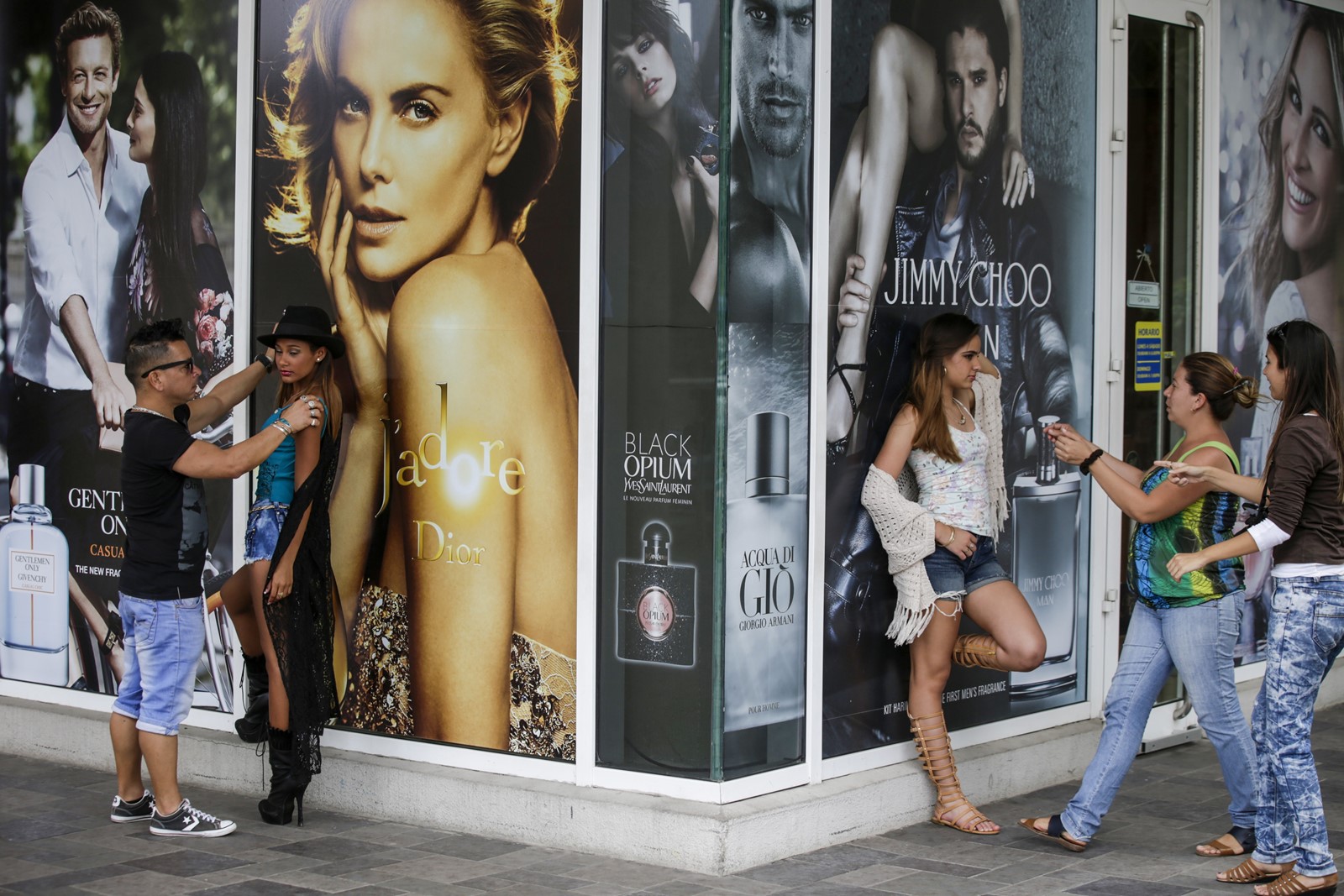


More than half a century of Cold War hostilities were thawing. The U.S. had relaxed travel restrictions to the island, and Cuba had partially
One bright afternoon, Obama took in a baseball game with then-President Raúl Castro, the leaders of longtime enemy nations chatting behind home plate. A few days later the Rolling Stones played a free concert — their first in a country that once banned Western rock. Afterward, thousands of giddy fans thronged the malecón, Havana’s seaside promenade, laughing and drinking rum.
I covered Obama’s visit for The Times, and remember the thrill in the soft Caribbean air. Cubans were hopeful.
“For the first time in my life, my friends were questioning: ‘Maybe I should stay, maybe I have a future here,’ ” 33-year-old Cuban journalist Liz Oliva Fernández remembers of that time.
“The narrative wasn’t, ‘Oh, poor Cuba.’ It was about Cubans creating things,” she said. “We wanted to be a part of the change, to be part of the transformation.”
But the promised transformation never came to pass.
When President Trump took office in 2017, he reinstated the travel ban, upped sanctions and closed the U.S. Embassy in Havana that Obama had opened.
President Biden left most of Trump’s restrictions in place. When Trump returned to office last year, he began what the White House has described as a “maximum pressure campaign” to force political and economic change in Cuba, including a near-total blockade on oil shipments that has sparked fuel shortages, price increases and prolonged blackouts on the island.
When I visited Havana again this spring to report on the mounting crisis, the malecón was deserted, strewn with brown seaweed that had been flung from the ocean by crashing waves.
The
The island didn’t just feel emptier, it was.
Tourism, a cornerstone of Cuba’s economy, started falling in Trump’s first term and plummeted during the pandemic. The blockade is making things worse, with Russian and Canadian airlines suspending flights to Cuba after the government said it was running out of jet fuel.
More than a million Cubans have left the island in recent years, and birth rates have nosedived.
Fernández said that most of her friends who were launching nonprofits and pop-up restaurants a decade ago are now scattered around the globe. “The truth is,” she said, “most of the people who are still here are just waiting to leave.”
One evening I sat down with a 25-year-old named Gian Carlo Brioso, who was selling his possessions
Brioso trained as a nurse and worked at a military hospital after college, but lost his job after he expressed support online for the San Isidro protest movement, which opposes government censorship of artistic expression.
He has kidney stones and is often in excruciating pain, but has
“The whole system has collapsed,” he said. “If a young person wants a future, this is not the place.”
Who one blames depends on their politics.
For Brioso, Cuban leaders are at fault for failing to build more resilient energy infrastructure and for going back on their Obama-era pledge to liberalize the stagnant state-run economy.
For Fernández, Cuba’s woes are inseparable from the U.S. campaign to isolate it economically.
To choke off inflow of hard currency to the island, the Trump administration has pressured Latin American countries to cancel decades-long deals with Havana to provide Cuban doctors. The White House placed Cuba on the list of state sponsors of terrorists, impeding its ability to access international banking services.
“The sanctions have everything to do with it,” said Fernández, who described U.S. Cuba policy as a form of collective punishment. “They are strangling us.”
White House officials have been open about their desire for regime change in Cuba, including the removal of President Miguel Díaz-Canel.
Trump, who this year deployed U.S. special forces to oust Venezuelan President Nicolás Maduro in a military operation, and who is waging war on Iran, last month mused that he hopes to have “the honor of taking Cuba.”
One day I went to meet a 63-year-old woman who asked that I call her
Like so many people I spoke to, Ira was exhausted. With no buses running, she had to walk nearly an hour to work each day. The caregiver for her elderly mother and a grandchild, she spends much of her time scouring government stores and the black market for food and medicine.
The sea breeze rustled the leaves of a palm as we talked in her small backyard. She pointed to a hole in the ground filled with charcoal. Amid rolling blackouts and natural gas shortages, she said, “this is my stove.”
“We’re adapting,” she said. “We’ve gotten used to waking up and not having electricity. And that is not normal.”
She is nostalgic for her youth during the early days of Castro’s revolution, when government food rations included coffee and sweets, not just beans and rice, and her family could afford outings to the movies and trips to the beach. She had been proud to be from Cuba, where education and healthcare were free, crime was rare and homelessness did not exist.
But by the time she became a mother, Cuba was in the throes of an economic crisis triggered by the 1991
Things had been hard then, she said, recalling the daily struggle to feed her growing sons. “But now it’s worse.”
It was not uncommon to see people sleeping on the street, or begging for money or food. One of her sons had been forced to leave the island in search of work.
Other relatives were gone, too, and it seemed every day she hears news of another acquaintance who had left. “The Cuban family is being fractured,” she said.
When she feels sad, she writes poetry:
She opposes foreign intervention in Cuba’s affairs. “We don’t go to other countries and tell them what to do,” she said. “We have the right to independence.”
But she is also frustrated by political repression in her country and the stubborn attachment of Cuban leaders to an economic model that has clearly failed.
“I don’t want a Ferrari,” she said. “I’m not asking for a six-bedroom house with a pool. I just want to have the bare necessities, and to be able to buy food for the week.”
The following afternoon, I attended a concert put on by a coalition of international leftist groups that had organized a convoy of humanitarian aid to Cuba. A few hundred people thrashed to a performance by the Irish rap group Kneecap, one of whose members wore a kaffiyeh — the scarf
I thought back to that Rolling Stones show, which had drawn more than half a million people.
Cuba 10 years ago appeared on the precipice of rejoining the wider world. Now it had been relegated again to a leftist cause, a symbol of anti-imperial resistance for some and the face of communism’s failings for others.
As Kneecap
Suddenly the music stopped and the lights cut out.
The nation’s electrical grid had failed, and for the third time that month, the entire country went dark.
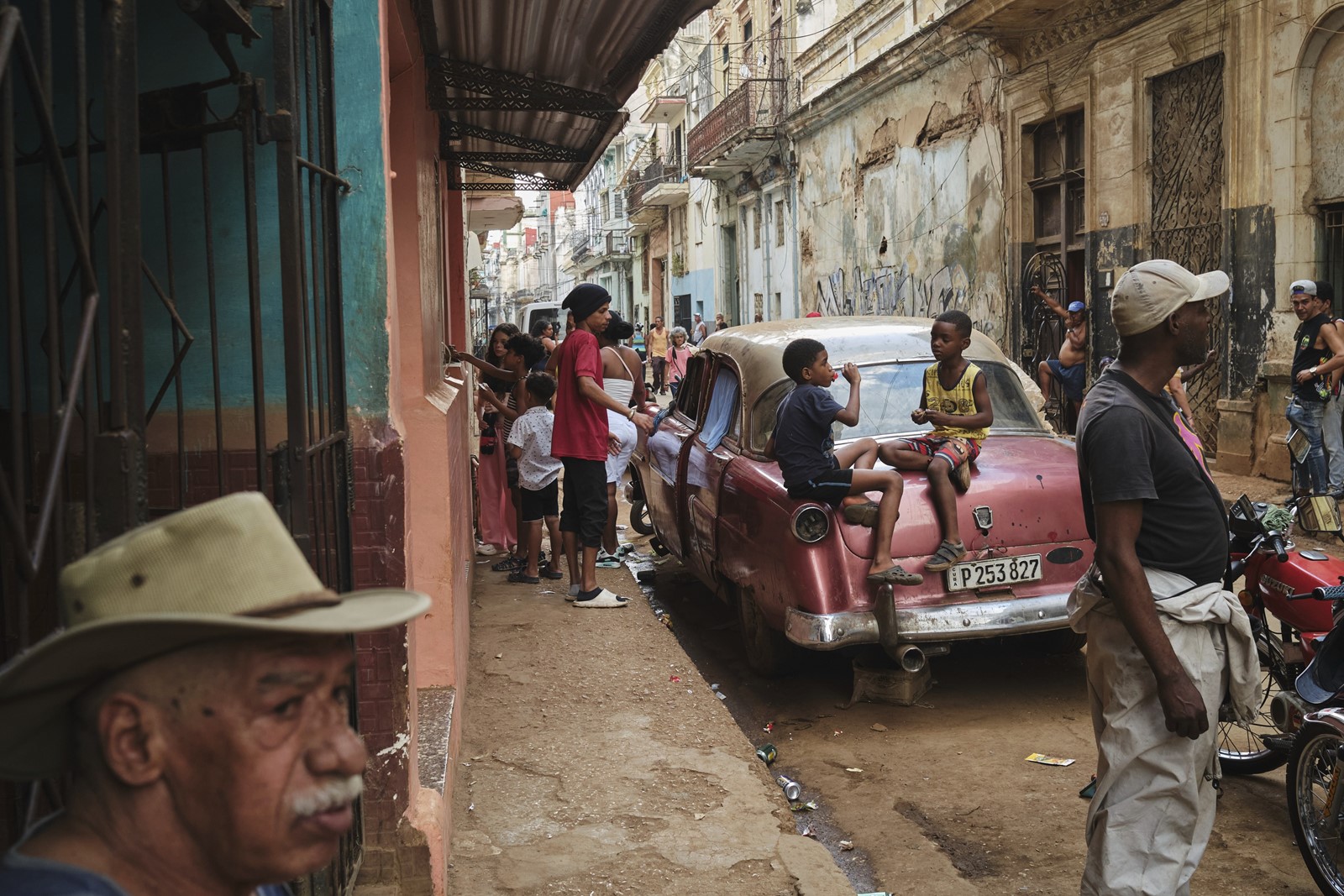
I walked across the city as the sun set, through narrow streets lined with once-grand buildings now crumbling with age. Flies buzzed over the growing mounds of trash.
Neighbors sat at plastic tables on the sidewalk, playing dominoes. On one stoop, a man gently plucked a guitar. On another, a family sang to the beat of a drum. Waves pummeled the malecón. The whole city was dark, and above, the sky was filled with endless stars.
