


Holocaust plaques rejected, stoking outrage
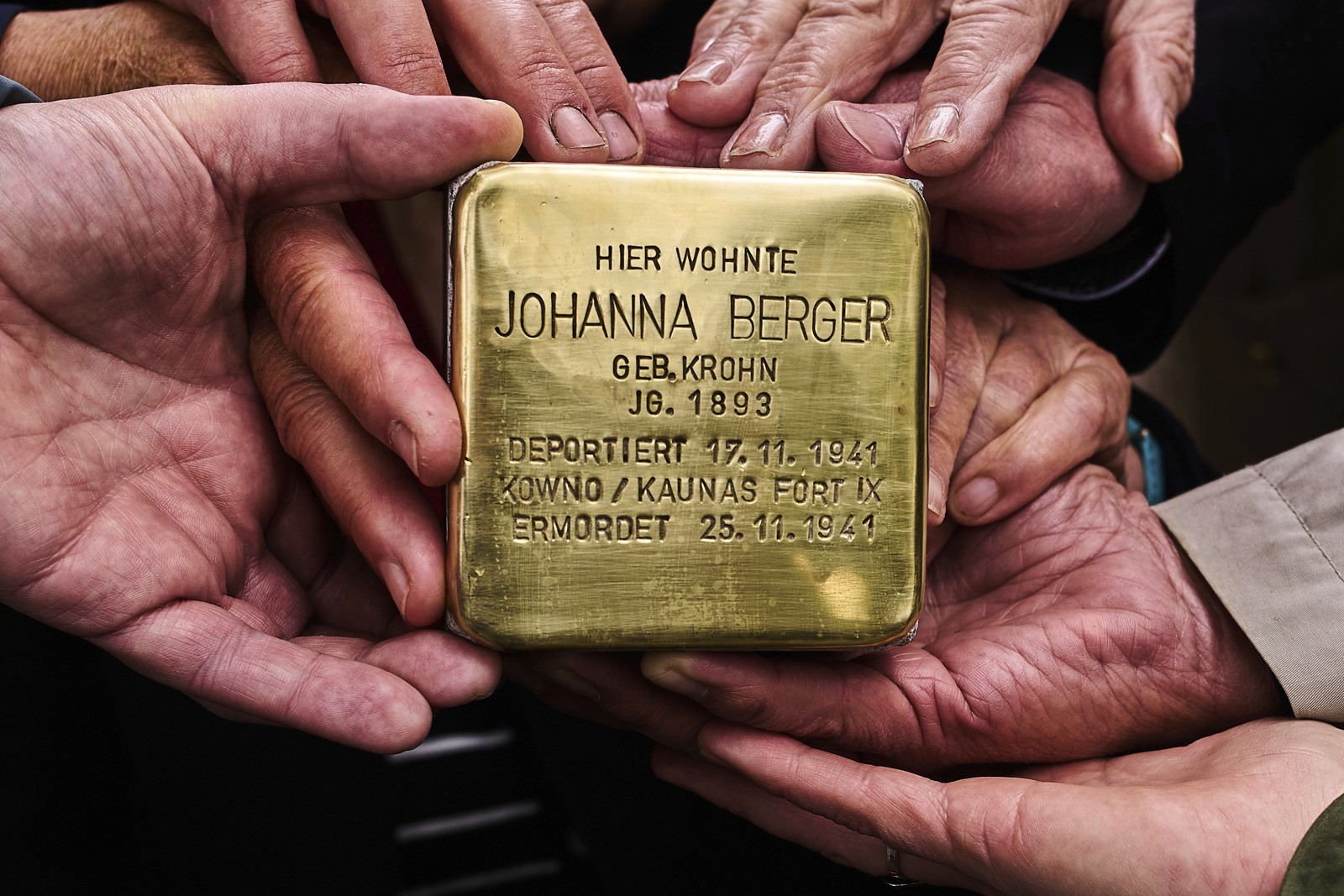


The city council of Heidenau, southeast of Dresden, voted last week to end the practice of laying the engraved brass plaques featuring the names of Holocaust victims into sidewalks — often in place of cobblestones and near the homes where they once lived.
Created by German artist Gunter Demnig, the Stolpersteine(“stumbling blocks”) are palm-sized memorial plaques with the names and fates of Jews and others persecuted by Nazis. They have become a prominent form of Holocaust remembrance in Germany.
The first block was laid in the western city of Cologne in 1992, and today more than 126,000 can be found in more than 30 countries across Europe, honoring some of the 6 million Jews and others killed in the Holocaust.
City councilors from the Alternative for Germany, or AfD, and Merz’s center-right Christian Democratic Union came together behind the municipal action, whose promoters claimed that many relatives of Holocaust victims consider the stones to be an inappropriate form of remembrance because passersby walk on them.
‘A deliberate attack’
But Israel’s ambassador to Germany, Ron Prosor, said he was “ashamed,” adding that some of the plaques in Berlin commemorated his own relatives. “And in Germany in the year 2026, a city council decides to no longer install new Stolpersteine,” he wrote on X.
Many Jews have traveled to Germany to attend the stone-laying ceremonies, often to remember victims who were gassed in Nazi death camps. The plaque-covered blocks amount to the closest thing to a grave or a burial.
Christian Meyer-Heidemann, the state commissioner for political education in the northern state of Schleswig-Holstein, condemned the decision in Heidenau, telling the German news agency DPA that it amounted to “a deliberate attack on our culture of remembrance.”
The town of about 16,000 is not alone in rejecting the plaque commemorations. Munich does not permit Stolpersteine to be laid on city-owned land, and has come up with alternative memorials. Some Jewish leaders there have objected to them on the grounds that they allow victims’ names to be trampled on.
Nazi-era crimes
The anti-immigration AfD, which has a stronghold in eastern Germany, has been riding a wave of domestic popularity and is staunchly supported by the Trump administration. Polls suggest the AfD, fresh off electoral successes in two states, is now the most popular party in Germany.
Merz, the CDU leader, has rejected any cooperation with the AfD, which has been criticized for brushing aside memories of the Nazi era that have loomed over Germany’s politics and mindset throughout the postwar era.
The AfD’s successes have tested the long-standing policy of mainstream parties to not cooperate with it.
The party has been classified by Germany’s domestic intelligence agency as an extremist group in some regions.
“Following the AfD’s electoral successes, it was certainly to be expected that something like this would happen,” Demnig was quoted by the DPA as saying. He accused the CDU of “leaving their Christian roots behind.”
