


Enthusiasts flock to glimpse bird last seen in Wisconsin in 1845
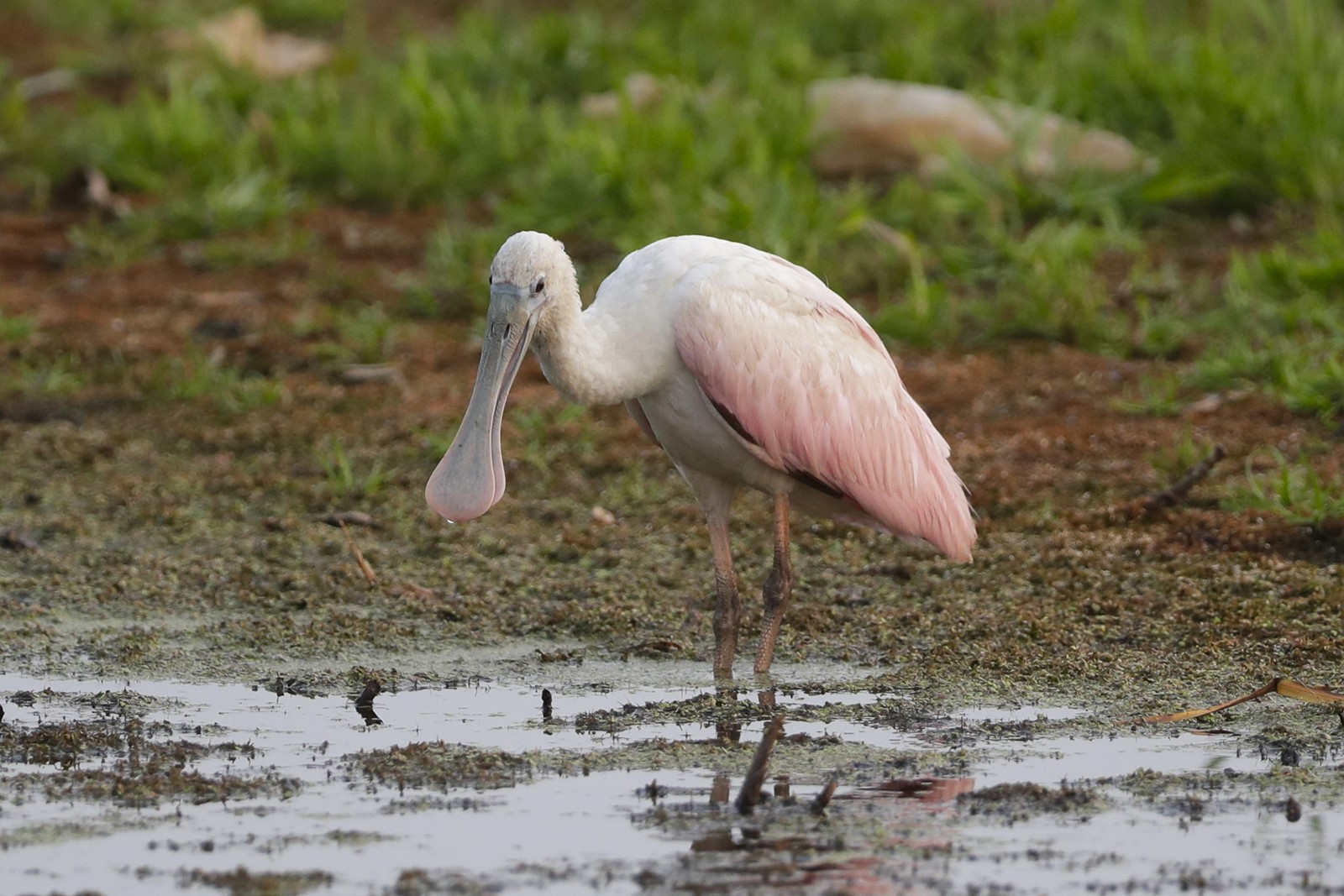


Logan Lasee, a member of the Bay Area Bird Club, spotted a roseate spoonbill in the Ken Euers Nature Area in Green Bay on July 26, Wisconsin Public Radio reported. More than 450 people have visited the nature area as of Tuesday.
James Andersen, deputy director of the city ’s Parks, Recreation and Forestry Department, which runs the nature area, told the Associated Press that the bird was last spotted Wednesday evening. He said usually only about a dozen people use the nature area at a time, but that 60 to 70 people were in the area looking for the bird at that time.
“The parking lot was full,” he said. “It’s awesome.”
Candy Evans told Wisconsin Public Radio that she and her husband left their home in Door County, Wis., at 6:30 a.m. to travel to the nature area.
“It was so interesting because it is just such a distinctive silhouette,” Evans said. “It’s just a gorgeous bird.”
The bird is pink and resembles a football on short stilts. Six types of spoonbills are found around the world, but only the roseate is present in North America. It’s usually found in Gulf Coast states and Central and South America. The last time a roseate spoonbill was seen in Wisconsin was in 1845, and that bird was dead.
It’s unclear how this bird reached Green Bay. Birders and scientists theorize it may have gotten lost or blown off course by a storm. Climate change and loss of habitat also are forcing birds farther north.
Tom Prestby, Wisconsin conservation manager at Audubon Great Lakes, which works to protect birds across the region, told Wisconsin Public Radio that the bird headed to Escanaba, Mich., after landing in Green Bay on July 26, but that it returned to Green Bay on Saturday.
David Drake, a wildlife ecology professor at the University of Wisconsin-Madison, said his advice for birders hoping to see the spoonbill is to not look for the bird, but to look for the hordes of people carrying cameras and spotting scopes.
